


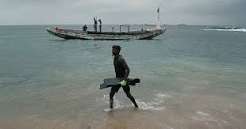
Senegal has vowed to intensify its crackdown on human smuggling networks following a migrant boat disaster off its northwestern coast that claimed at least 39 lives, in one of the country’s deadliest migration tragedies in recent years.
President Bassirou Diomaye Faye expressed condolences to the victims’ families and pledged decisive action against criminal networks organising dangerous journeys across the Atlantic in search of better opportunities in Europe.
The wooden boat, locally known as a pirogue, capsized off the coast near Kébémer on Friday, Nov. 6, while travelling from Saint-Louis in northern Senegal towards Spain’s Canary Islands.
The death toll rose from an initial 21 to 39 after additional bodies were recovered. Only one survivor had been reported, while the exact number of passengers aboard the vessel remained unknown.
Senegal’s Interior Minister, Mouhamadou Makhtar Cissé, visited the affected coastal communities on Monday to pay his respects and offer the government’s condolences to bereaved families.
He acknowledged the economic difficulties and aspirations driving young people to leave the country but warned against risking their lives through irregular migration.
“We can understand the young people’s wish to leave, their daily difficulties, the desire to fulfil their potential and help their families,” Cissé said. “Leaving is an option but dying at sea should not be an option.”
The minister described smugglers facilitating the dangerous crossings as modern-day slave traders, insisting that authorities must pursue them relentlessly.
He called for stronger enforcement against trafficking and smuggling networks, alongside public awareness campaigns to discourage young people from undertaking perilous journeys based on unrealistic expectations of life abroad.
Cissé also advocated arrangements that would allow Spain to issue temporary work permits to migrants, providing safer and legal alternatives to irregular crossings.
The government has further pledged to strengthen cooperation with neighbouring countries to combat smuggling networks and improve maritime surveillance.
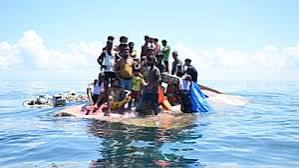
The tragedy has renewed concerns about the dangers of the Atlantic migration route from West Africa to Spain’s Canary Islands, which thousands of migrants attempt to cross aboard often overcrowded and poorly equipped boats.
The International Organization for Migration (IOM) said it had recorded at least 454 deaths and disappearances along the Atlantic route as of Oct. 26, 2026, warning that the actual figure could be higher because many vessels disappear without survivors or recovered bodies.
Meanwhile, Senegalese human rights organisation Action for Human Rights and Friendship has called for a parliamentary inquiry into the government’s handling of irregular migration, arguing that existing measures have not sufficiently prevented deaths at sea.
The latest disaster highlights the continuing challenge facing West African governments as they seek to dismantle smuggling networks while addressing unemployment, poverty and limited economic opportunities that push young people towards dangerous migration routes.










Leave a comment