


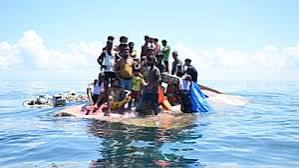
Families in northern Senegal are struggling to come to terms with the loss of loved ones after a migrant boat capsized off the country’s Atlantic coast, killing at least 39 people and leaving only one known survivor.
The wooden boat overturned on Nov. 7 near Lompoul, off the coast of Kébémer in Senegal’s northern Louga Region, as it travelled from Saint-Louis towards the Spanish coast.
The disaster has left several communities in mourning, with relatives gathering at medical facilities to identify the bodies of missing family members and make arrangements for their burial.
As rescue and recovery operations continued, authorities said 39 bodies had been recovered by Monday, Nov. 9. Of these, 24 had been identified and returned to their families, while 11 were awaiting identification. Four bodies found in an advanced state of decomposition had been buried.
Only one passenger had been rescued alive. The exact number of people aboard the vessel remains unknown, leaving uncertainty over whether others are still missing.
Senegal’s Interior and Public Security Minister, Mouhamadou Makhtar Cissé, visited the affected area on Monday to express the government’s condolences and offer support to bereaved families.
President Bassirou Diomaye Faye also expressed his condolences, saying state authorities and resources had been mobilised to search for missing people, assist survivors and support affected families.
The president pledged renewed action against criminal networks organising dangerous irregular migration journeys and called for efforts to create better opportunities for young people within Senegal.
The government has also emphasised the need for stronger cooperation with neighbouring countries to tackle human-smuggling networks.
The tragedy has renewed attention on the dangerous Atlantic migration route connecting West Africa to Spain’s Canary Islands. Thousands of people attempt the crossing each year, often travelling in overcrowded and poorly equipped boats in search of employment and better living conditions in Europe.
The International Organization for Migration has repeatedly warned about the dangers of the route, where strong currents, long distances and inadequate vessels make journeys particularly hazardous.
For the families in Senegal, however, the immediate concern is the human cost of the disaster: identifying loved ones, recovering their remains and confronting the loss of relatives who had left home hoping for a better future.








Leave a comment