


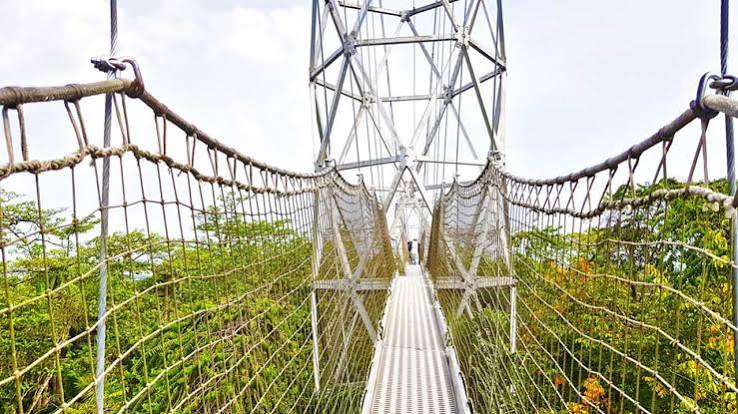
Amid the rapid expansion of buildings, roads and other infrastructure across Lagos, the Lekki Conservation Centre remains one of the city’s important natural spaces, preserving a stretch of forest and wetland increasingly surrounded by urban development.
Located on the Lekki Peninsula, the 78-hectare reserve was established in 1990 by the Nigerian Conservation Foundation (NCF) to protect the area’s indigenous biodiversity and provide a sanctuary for wildlife. Supported by Chevron Nigeria Limited, the centre has developed into a major conservation, environmental education and ecotourism destination.
Its landscape includes wetlands, swamp forests and diverse vegetation that provide habitats for different wildlife species. Monkeys, birds and other animals can be found within the reserve, while its elevated canopy walkway offers visitors a view of the forest from above.
Beyond tourism, the centre performs important ecological functions. Its vegetation helps absorb rainfall, supports biodiversity, stores carbon and contributes to moderating temperatures in an increasingly built-up part of Lagos.
However, the reserve faces growing pressure from urban expansion, land reclamation and the conversion of natural landscapes into residential and commercial developments.
A March 2025 report by The Guardian Nigeria highlighted concerns over the shrinking natural habitats around the Lekki axis. Nigerian Conservation Foundation Director-General Joseph Onoja warned that unplanned development and the destruction of green spaces could displace wildlife, increase urban heat and worsen flooding.
The pressures extend beyond the immediate surroundings of the conservation centre. A study published in the journal Regional Studies in Marine Science in December 2024 examined land-use and coastline changes along the Lekki Peninsula between 2002 and 2022. It found that urbanised areas increased from 5.36 per cent to 42.37 per cent during the period, while approximately 56 per cent of the coastline experienced retreat.
The findings illustrate the scale of environmental changes taking place along the peninsula, where urban development and coastal processes are reshaping natural landscapes.
More recent research has reinforced concerns about the vulnerability of Lagos’ green spaces. A systematic review published in October 2026 identified rapid urbanisation, infrastructure expansion, land-use pressure and fragmented governance as major challenges affecting urban forests and green infrastructure in the state. It also highlighted the importance of effective planning, maintenance, monitoring and funding to protect conservation assets.
The environmental consequences are not limited to wildlife. Wetlands and forests help regulate water flows, reduce surface runoff and provide natural protection against flooding. Their destruction can leave communities more exposed to the effects of heavy rainfall, particularly in low-lying coastal areas.
Despite these challenges, the Lekki Conservation Centre continues to provide an important platform for environmental education and public engagement. Through visits, guided experiences and conservation activities, it helps introduce residents, students and tourists to the value of protecting natural ecosystems.
The centre’s long-term survival, however, depends on more than its boundaries. Protecting the reserve requires stronger enforcement of land-use regulations, effective development planning, sustained conservation funding and cooperation among government agencies, communities and environmental organisations.
As Lagos continues to grow, the Lekki Conservation Centre represents a reminder that urban development and environmental protection must advance together. Preserving the city’s remaining natural spaces is not simply about protecting wildlife; it is also about safeguarding the environmental systems that support human life and make the city more resilient.








Leave a comment