


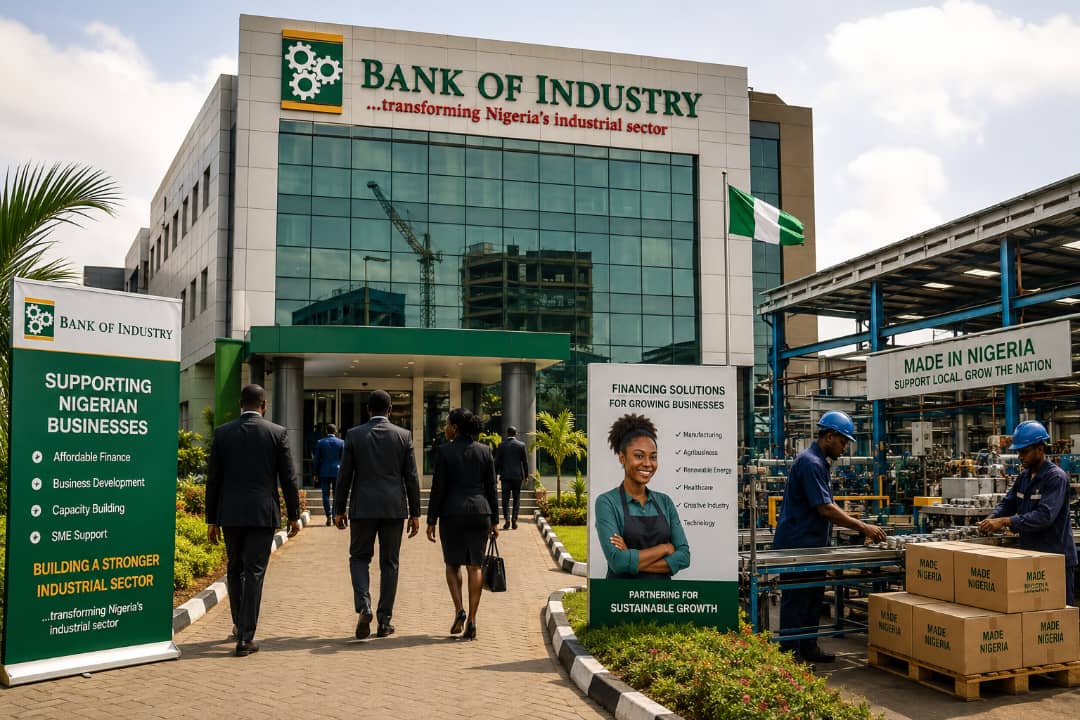
Nigeria’s drive to diversify its economy is receiving renewed momentum as the Bank of Industry (BOI) continues to expand financing opportunities for small and medium-sized enterprises (SMEs), manufacturers and businesses operating in key productive sectors.
The Bank of Industry says access to affordable finance remains one of the most significant challenges facing Nigerian businesses. Through its various intervention programmes, the development finance institution is providing loans and business support services aimed at improving productivity, stimulating industrialization and creating sustainable employment.
The bank’s financing initiatives target sectors including manufacturing, agriculture, renewable energy, healthcare, the creative economy and technology. By supporting businesses with long-term capital, BOI aims to strengthen domestic production, encourage value addition and reduce Nigeria’s dependence on imported goods.
Industry experts believe that improving access to finance is essential for increasing the competitiveness of Nigerian businesses. Many SMEs struggle to expand operations because of high commercial lending rates, limited collateral and restricted access to investment capital. Development finance institutions such as BOI play a critical role in bridging this financing gap.
Beyond financial support, BOI also works with entrepreneurs through business advisory services, capacity-building programmes and partnerships with government agencies and private-sector organizations. These initiatives are designed to improve business management, strengthen corporate governance and increase the long-term sustainability of enterprises.
Economic analysts note that stronger SME financing can have far-reaching benefits for the Nigerian economy. Small businesses account for a significant share of employment and contribute substantially to gross domestic product. Increased investment in the sector can stimulate innovation, promote local manufacturing, expand exports and generate new jobs, particularly for young people and women entrepreneurs.
However, experts stress that financing alone will not be sufficient to unlock the full potential of Nigerian businesses. Improvements in electricity supply, transport infrastructure, digital connectivity and the overall ease of doing business remain critical to supporting industrial growth.
As Nigeria pursues economic diversification, stakeholders believe that sustained collaboration between development finance institutions, government agencies and the private sector will be essential for building a resilient industrial base and fostering inclusive economic development.
If effectively implemented, expanded SME financing could strengthen local industries, improve business competitiveness and position Nigeria as a leading manufacturing and investment destination in Africa.













Leave a comment