


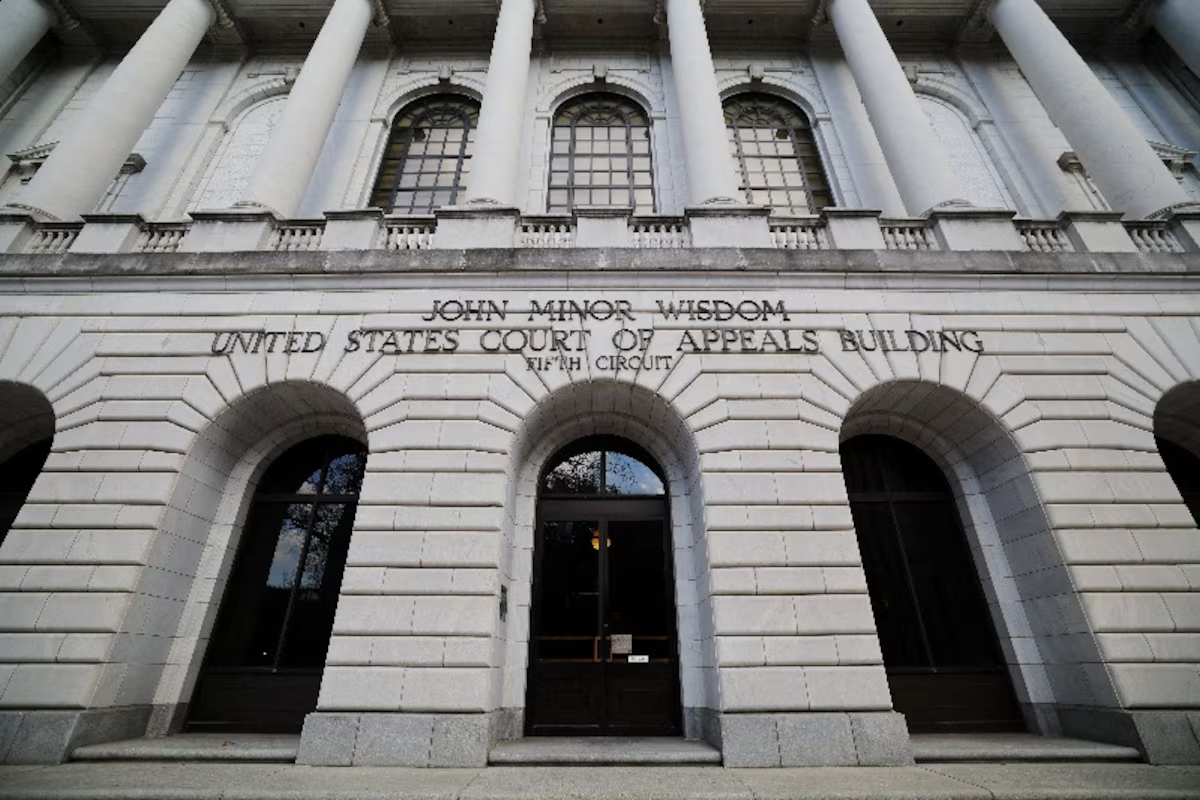
Civil rights veterans in the United States say history is repeating itself after a new ruling by the U.S. Supreme Court further weakened the Voting Rights Act, raising concerns about renewed barriers to voting access.
The court’s decision limits the federal government’s ability to oversee changes to state election laws, a power that had been central to protecting minority voters since the landmark legislation was passed in 1965. The ruling builds on earlier decisions that have gradually reduced federal enforcement mechanisms under the act.
Veterans of the civil rights movement say the changes echo conditions seen before the Voting Rights Act, when discriminatory practices such as literacy tests and restrictive registration rules were used to suppress Black voters and other minority groups. They warn that without strong federal oversight, similar patterns could re emerge in different forms.
Advocates point to a wave of state level voting measures in recent years, including stricter identification requirements and limits on mail in voting, which they argue disproportionately affect minority communities. They say the latest ruling could embolden more states to enact such policies with reduced risk of federal intervention.
Supporters of the court’s decision, however, argue that election laws should be determined at the state level and that the previous framework gave the federal government excessive control over local processes. They say the ruling restores a better balance between state and federal authority.
The decision has intensified political debate ahead of upcoming elections, with civil rights groups calling for Congress to pass new legislation to restore protections. Lawmakers remain divided, making immediate reforms uncertain.
Analysts say the long term impact of the ruling will depend on how states respond and whether federal lawmakers move to fill the gaps left by the court. For many civil rights veterans, however, the moment is a stark reminder of past struggles and the ongoing fight over voting access in the United States.










Leave a comment