


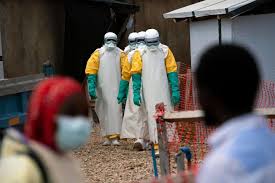
Health workers are scrambling to contain a fast spreading Ebola outbreak in Democratic Republic of Congo, as authorities and international partners step up emergency response efforts to prevent further transmission.
Officials said the outbreak has spread quickly across affected areas, prompting urgent deployment of medical teams, contact tracers and vaccination units. The World Health Organization has sent emergency response teams to support local health authorities, while reinforcing surveillance and treatment capacity.
The response is focused on identifying and isolating cases, tracing contacts of infected individuals and administering vaccines to high risk groups. Health workers are also conducting community outreach campaigns to raise awareness about symptoms and prevention, a critical step in limiting the spread of the virus.
Ebola, a highly infectious and often fatal disease, is transmitted through direct contact with bodily fluids of infected individuals or contaminated surfaces. Rapid containment is essential, as delays in detection and isolation can lead to exponential spread, particularly in densely populated or hard to reach areas.
Authorities say logistical challenges, including difficult terrain and limited healthcare infrastructure, are complicating the response. Insecurity in some regions has also made it harder for teams to access affected communities and carry out interventions effectively.
Despite these challenges, officials remain cautiously optimistic that early action and coordinated efforts can bring the outbreak under control. Vaccination campaigns and improved preparedness from previous outbreaks are expected to play a key role in limiting fatalities and preventing wider regional spread.
The situation is being closely monitored by global health agencies, given Congo’s history with Ebola outbreaks and the potential risk of cross border transmission. For now, the priority remains rapid containment, as health workers work against time to stop the virus from spreading further.













Leave a comment