


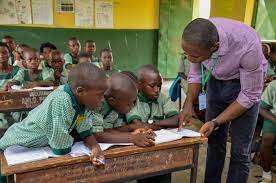
Nigeria has reversed its three-year-old policy mandating indigenous languages as the medium of instruction in early education, announcing that English will once again be used from pre-primary level through to university. Education Minister Tunji Alausa said the programme had failed to deliver the expected results and was being cancelled with immediate effect.
The mother-tongue policy, introduced under former Minister Adamu Adamu, was built on the belief that children learn faster in their native languages a view backed by various UN studies. But Nigeria’s struggling education system, long plagued by inadequate materials, low teacher pay, under-trained staff and frequent strikes, could not support the scale of the shift.
Despite 85% of Nigerian children entering primary school, fewer than half complete secondary education. The UN estimates about 10 million Nigerian children are currently out of school — the highest number globally.
Dr Alausa said data from major exam bodies, including WAEC, Neco and Jamb, showed significantly weaker results in regions that adopted mother-tongue teaching most aggressively. According to him, “mass failure” in these zones proved the policy was not working.
Reactions have been mixed. Some education experts and parents say the reversal is necessary, arguing that Nigeria lacked the trained teachers, materials and funding needed to make the ambitious programme successful. Education analyst Dr Aliyu Tilde welcomed the move, stressing that key national exams are conducted in English and that the country was “not ready” for a multilingual education structure.
Parents like Hajara Musa also support the reinstatement of English, saying early exposure is crucial in a globalised world.
Others, however, believe the government acted too quickly. Analysts like Habu Dauda argue the policy needed more time and proper investment in teacher training and learning resources before being judged.
The debate underscores Nigeria’s ongoing struggle to balance its diverse linguistic identity with the realities of global competitiveness, national exams and the broader demands of modern education.









Leave a comment