


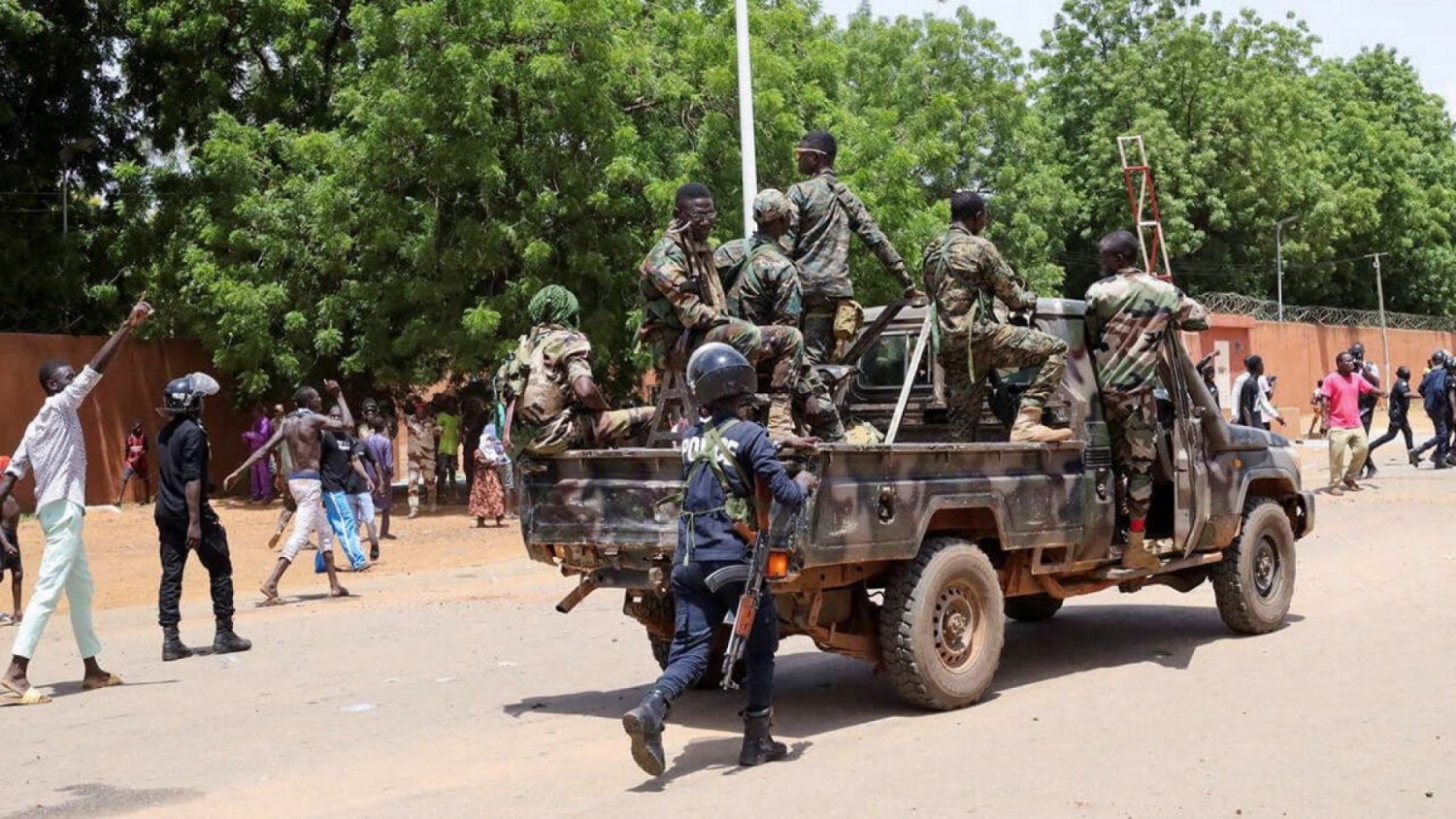
In one of the deadliest attacks on Nigerien security forces in recent months, more than 200 armed militants riding motorbikes and vehicles stormed a Niger army base in the western border town of Banibangou on Thursday, June 19, killing at least 34 soldiers and injuring 14 others, according to the country’s defence ministry.
The ministry, in a somber statement broadcast on national television, described the assailants as “mercenaries” and condemned the assault as “cowardly and barbaric.” The attackers reportedly approached the garrison aboard eight vehicles and over 200 motorcycles, a tactic commonly used by jihadist insurgents in the Sahel region. Though Nigerien forces reportedly killed “dozens of terrorists” in the confrontation, the scale and coordination of the attack highlight the deepening insecurity along the country’s volatile western frontier.
Banibangou, located near the tri-border area where Niger, Mali, and Burkina Faso converge, has long been a hotspot for extremist violence. The region is plagued by operations from armed jihadist groups linked to al-Qaeda and the Islamic State, which continue to expand their territorial influence and perpetrate mass-casualty attacks on civilians and military targets.
Thursday’s massacre underscores the fragile security situation in Niger, a country still reeling from the aftermath of a military coup in July 2023, which ousted democratically elected President Mohamed Bazoum. At the time, Niger’s military leaders cited the inability of the former government to contain the insurgency as a key justification for their seizure of power. However, nearly a year later, violent attacks persist despite the junta’s promises to restore order.
The ruling military regime has since expelled French and U.S. forces that had been providing critical intelligence, air support, and training to Nigerien troops in the fight against Islamist militants. In their place, the junta has shifted alliances, deepening military and diplomatic cooperation with Russia and Turkey, while strengthening ties with neighboring Burkina Faso and Mali under a joint security initiative known as the Alliance of Sahel States (AES).
Still, the tactical and operational gains promised by this new alignment have yet to materialize. Attacks by armed groups have continued with impunity, further destabilizing already vulnerable communities and undermining public trust in the junta’s security policies. Analysts warn that the expulsion of Western troops and advisors may have left critical intelligence gaps and weakened the effectiveness of counterterror operations.
As Nigerien forces continue search-and-destroy missions in the aftermath of the Banibangou assault, the broader Sahel crisis shows no sign of abating. The region remains the epicenter of global terrorism-related deaths, with militant groups exploiting weak governance, porous borders, and local grievances to expand their reach.
President Abdourahamane Tiani and his transitional military government now face mounting internal and regional pressure to curb the violence and prevent further loss of life. The international community, meanwhile, is watching closely as the Sahel’s security crisis threatens to spill over into coastal West African states and beyond.
The latest attack is a grim reminder that the road to lasting peace and stability in the Sahel remains long and uncertain and that Niger’s struggle against terrorism is far from over.













Leave a comment