


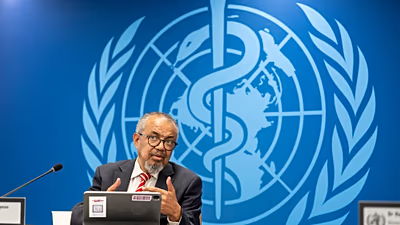
The World Health Organization (WHO) has called for increased international support to help contain an ongoing Ebola outbreak, warning that sustained funding, medical resources and coordinated action are critical to preventing further spread of the disease.
The U.N. health agency said national authorities, humanitarian organizations and development partners must strengthen surveillance, testing, treatment and community engagement to bring the outbreak under control.
According to the WHO, rapid case detection, contact tracing and infection prevention measures remain essential to interrupting transmission. The agency also emphasized the importance of ensuring that healthcare workers have adequate protective equipment, training and medical supplies.
Health officials warned that limited resources, difficult terrain and population movements can complicate outbreak response efforts, increasing the risk of wider transmission if containment measures are not adequately supported.
The WHO urged governments and international donors to provide additional financial and technical assistance to strengthen emergency response operations, laboratory capacity and vaccination campaigns where appropriate.
Public health experts say Ebola outbreaks require swift, coordinated responses involving governments, local communities and international partners. They note that early detection, transparent reporting and public awareness are key to reducing transmission and improving patient outcomes.
The agency also stressed the importance of community trust, noting that misinformation and fear can discourage people from seeking medical care or cooperating with health authorities. Effective risk communication, officials said, is essential to encouraging timely reporting of symptoms and adherence to public health guidance.
Development specialists warn that prolonged outbreaks can place significant pressure on already fragile health systems, disrupt education and economic activity, and divert resources from other essential healthcare services.
The WHO reiterated that strengthening health systems, improving disease surveillance and investing in emergency preparedness are critical to reducing the impact of future outbreaks. It also called for continued regional cooperation, particularly in border areas where population movement can increase the risk of cross-border transmission.
As response efforts continue, the WHO said sustained international solidarity will be essential to supporting affected countries, protecting vulnerable communities and preventing the outbreak from escalating into a broader regional public health emergency.









Leave a comment