


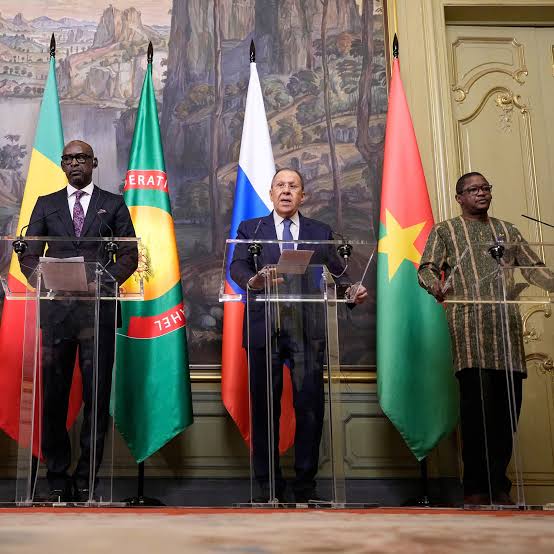
Russia has formally pledged to continue its military support for the Alliance of Sahel States, reaffirming its commitment to the three junta-led governments of Burkina Faso, Mali and Niger at a high-level meeting in Niamey attended by Russian Foreign Minister Sergei Lavrov. The joint statement issued on Wednesday confirmed that Moscow would “continue its support for strengthening the operational capacities of AES member states’ armed forces,” cementing a partnership that has reshaped the security landscape of West Africa and deepened the strategic rift between the Sahel region and its former Western partners.
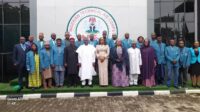
Lavrov’s visit to Niger was part of a structured diplomatic engagement, described as a high-level meeting with the foreign ministers of all three Alliance of Sahel States members. It followed a similar format gathering held in Moscow in April 2025, signalling that the Russia-AES relationship is now operating through established and recurring diplomatic channels rather than ad hoc contacts. The regularity of these meetings reflects how institutionalised the partnership has become in a relatively short time.
The three Sahel countries came under military rule through a series of coups between 2020 and 2023. Each government, upon taking power, moved decisively away from France, their former colonial ruler and long-standing security partner, and toward Russia. The departure of French forces and the closure of Western military bases followed, replaced by the presence of Russia’s Africa Corps paramilitaries, formerly known as the Wagner Group, who are now actively involved in operations against the jihadist groups that have killed tens of thousands of people across the region over the past decade.
The military dimension of the Russia-AES relationship is the most visible, but it is not the only one Moscow is pursuing. Wednesday’s statement also pointed to Russian ambitions in the energy and mining sectors of the three countries, all of which possess significant natural resources. Mali’s gold sector, Niger’s uranium reserves, and Burkina Faso’s mineral wealth represent strategic interests that make the partnership attractive to Moscow beyond its immediate security value. For the AES governments, Russian investment and commercial engagement offer an alternative to the Western-led economic frameworks they have increasingly rejected.
The deepening of Russia’s footprint in the Sahel is a development with consequences that extend well beyond the three countries directly involved. For France and its European partners, it represents the near-complete loss of influence over a region where they had been militarily engaged for years. For ECOWAS, the West African regional bloc from which all three countries have now withdrawn, it raises difficult questions about the future of regional security cooperation and the block’s capacity to respond to instability at its northern edge. And for the populations of Burkina Faso, Mali and Niger, who continue to endure jihadist violence despite years of both Western and now Russian military presence, the change in external partners has not yet translated into the security that ordinary people on the ground desperately need.
Russia’s commitment, reaffirmed in Niamey on Wednesday, ensures that its presence in the Sahel will deepen rather than recede in the months ahead. Whether that presence ultimately contributes to stability or simply entrenches the military governments that invited it in, while the underlying drivers of the jihadist insurgency continue unaddressed, is the question that will define the legacy of this partnership for the people living under it.







Leave a comment