


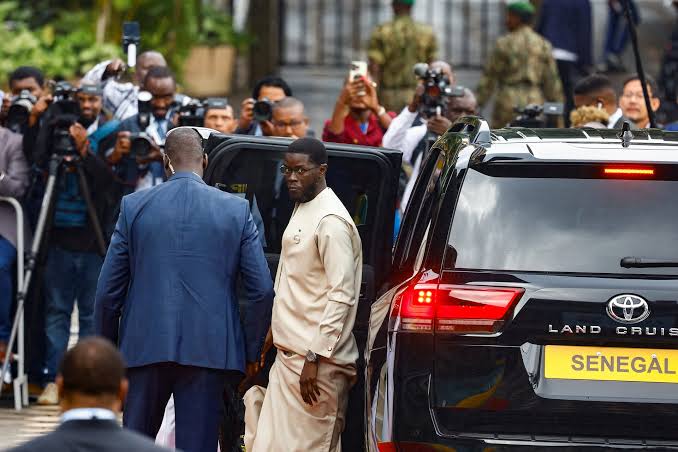
President Bassirou Diomaye Faye is set to launch his own political party, marking a significant shift in Senegal’s political landscape and deepening the rift with his former ally, Ousmane Sonko. The decision follows months of growing tensions between the two leaders, who rose to power together after their historic election victory in 2024. A coalition supporting President Faye announced that he has appointed former prime minister Aminata Touré to lead a task force responsible for establishing the new political movement.
The planned party would provide President Faye with an independent political platform separate from the PASTEF party, where both he and Sonko built their political careers. Relations between the two have steadily deteriorated over disagreements on governance, policy direction, and the distribution of political influence within the administration. The divisions became more apparent after Sonko was removed from his position as prime minister, fueling speculation that the alliance which brought them to power had effectively come to an end.
The announcement comes at a crucial time for Senegal, as the country prepares for a national referendum on constitutional reforms. One of the key proposals seeks to prevent a sitting president from simultaneously serving as the leader of a political party, a measure supporters say would strengthen democratic institutions and reduce the concentration of political power. Although the amendment has already been approved by parliament, President Faye opted to submit it to a public vote rather than sign it directly into law, allowing Senegalese citizens to make the final decision.
Political analysts believe the creation of a new party could significantly reshape Senegal’s political future ahead of upcoming local and national elections. It is expected to test the popularity and influence of both President Faye and Ousmane Sonko, whose political partnership was once seen as a symbol of reform and democratic renewal. While supporters of the president argue that a new party will provide clearer leadership and improve governance, critics warn that the split could weaken the reform agenda that helped bring the current administration to power.
The coming months are expected to be pivotal for Senegal, with the launch of President Faye’s new political movement, the constitutional referendum, and preparations for future elections all likely to influence the country’s political direction. Observers across West Africa will be watching closely to see how the evolving rivalry between Faye and Sonko shapes one of the region’s most closely followed democracies.








Leave a comment