


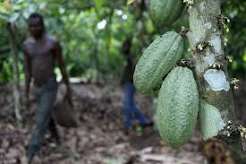
Chocolate prices are soaring in shops around the world, yet in the cocoa fields of West Africa, the mood is one of deep disillusionment. Prices paid to farmers have crashed nearly 75 percent from their peak in 2024, leaving the growers who supply the world’s chocolate industry with a fraction of what they were earning just two years ago. Now, the two countries that together dominate global cocoa production are fighting back with a strategy borrowed from the oil world.
Ghana and Ivory Coast, the world’s largest cocoa producers, have agreed to revive what is being described as a Cocoa OPEC, a coordinated plan to harmonise farmgate prices and align crop calendars across both countries. Presidents Alassane Ouattara and John Mahama have thrown their political weight behind the initiative and have invited Cameroon and Nigeria, the region’s smaller cocoa producers, to join the alliance. The ambition at the heart of the proposal is direct: to transform African cocoa nations from price takers, at the mercy of commodity markets dominated by buyers in Europe and North America, into price makers who can shape the terms on which their most valuable crop enters the global market.
The idea is not entirely new. Ghana and Ivory Coast have attempted coordinated approaches to cocoa pricing before, most notably through the Living Income Differential introduced in 2019, which added a premium to cocoa sold from both countries. That initiative had limited success in permanently raising farmer incomes, partly because buyers found ways to work around it and partly because the two countries lacked the unified enforcement mechanisms needed to make it stick. A more formal OPEC-style alliance, if designed with stronger coordination and buy-in from additional producing nations, could carry more weight.
But experts tracking the cocoa sector argue that price coordination, while important, addresses only one part of a deeper structural problem. Max Koffi, founder of Equal Trade Alliance, points to the value chain as the more fundamental issue. Africa grows the cocoa but does not control what happens to it after it leaves the continent. Processing, branding, manufacturing, and distribution, the stages where most of the value in the chocolate industry is actually created, are dominated by corporations based in Europe and North America. The result is that African nations supply the essential raw material for a multi-billion dollar global industry and capture only a small fraction of the wealth it generates.
The answer, according to this school of thought, is not simply to negotiate higher prices for raw cocoa beans. It is to build local processing capacity, develop African chocolate brands, and create distribution networks that keep more of the value on the continent before the product ever reaches a foreign buyer. Several African countries have made progress in this direction in recent years, with processing facilities expanding in both Ghana and Ivory Coast, but the scale of local processing remains far below the continent’s production capacity.
The Cocoa OPEC initiative and the push for greater local processing are not mutually exclusive. A coordinated pricing mechanism could provide African producers with greater leverage in the short term while investments in value addition build a more sustainable long-term position. The challenge is execution. OPEC itself has demonstrated over decades that coordinating competing national interests around a shared commodity is far harder in practice than it appears in theory, and the cocoa alliance will need to resolve questions about enforcement, compliance, and what happens when individual member governments face economic pressures that tempt them to undercut the agreed price floor.
For the farmers in the fields of Ghana and Ivory Coast who have watched prices collapse while chocolate on European supermarket shelves has never been more expensive, the stakes are immediate and personal. The gap between what a cocoa farmer earns and what a consumer pays for a bar of chocolate is one of the most visible and persistent inequities in global commodity trade. Whether a Cocoa OPEC can narrow that gap in any meaningful and lasting way is the question that the next phase of this initiative will begin to answer.Ghana and Ivory Coast Are Building a Cocoa OPEC. Can It Finally Make Africa the Price Maker, Not the Price Taker?
Chocolate prices are soaring in shops around the world, yet in the cocoa fields of West Africa, the mood is one of deep disillusionment. Prices paid to farmers have crashed nearly 75 percent from their peak in 2024, leaving the growers who supply the world’s chocolate industry with a fraction of what they were earning just two years ago. Now, the two countries that together dominate global cocoa production are fighting back with a strategy borrowed from the oil world.
Ghana and Ivory Coast, the world’s largest cocoa producers, have agreed to revive what is being described as a Cocoa OPEC, a coordinated plan to harmonise farmgate prices and align crop calendars across both countries. Presidents Alassane Ouattara and John Mahama have thrown their political weight behind the initiative and have invited Cameroon and Nigeria, the region’s smaller cocoa producers, to join the alliance. The ambition at the heart of the proposal is direct: to transform African cocoa nations from price takers, at the mercy of commodity markets dominated by buyers in Europe and North America, into price makers who can shape the terms on which their most valuable crop enters the global market.
The idea is not entirely new. Ghana and Ivory Coast have attempted coordinated approaches to cocoa pricing before, most notably through the Living Income Differential introduced in 2019, which added a premium to cocoa sold from both countries. That initiative had limited success in permanently raising farmer incomes, partly because buyers found ways to work around it and partly because the two countries lacked the unified enforcement mechanisms needed to make it stick. A more formal OPEC-style alliance, if designed with stronger coordination and buy-in from additional producing nations, could carry more weight.
But experts tracking the cocoa sector argue that price coordination, while important, addresses only one part of a deeper structural problem. Max Koffi, founder of Equal Trade Alliance, points to the value chain as the more fundamental issue. Africa grows the cocoa but does not control what happens to it after it leaves the continent. Processing, branding, manufacturing, and distribution, the stages where most of the value in the chocolate industry is actually created, are dominated by corporations based in Europe and North America. The result is that African nations supply the essential raw material for a multi-billion dollar global industry and capture only a small fraction of the wealth it generates.
The answer, according to this school of thought, is not simply to negotiate higher prices for raw cocoa beans. It is to build local processing capacity, develop African chocolate brands, and create distribution networks that keep more of the value on the continent before the product ever reaches a foreign buyer. Several African countries have made progress in this direction in recent years, with processing facilities expanding in both Ghana and Ivory Coast, but the scale of local processing remains far below the continent’s production capacity.
The Cocoa OPEC initiative and the push for greater local processing are not mutually exclusive. A coordinated pricing mechanism could provide African producers with greater leverage in the short term while investments in value addition build a more sustainable long-term position. The challenge is execution. OPEC itself has demonstrated over decades that coordinating competing national interests around a shared commodity is far harder in practice than it appears in theory, and the cocoa alliance will need to resolve questions about enforcement, compliance, and what happens when individual member governments face economic pressures that tempt them to undercut the agreed price floor.
For the farmers in the fields of Ghana and Ivory Coast who have watched prices collapse while chocolate on European supermarket shelves has never been more expensive, the stakes are immediate and personal. The gap between what a cocoa farmer earns and what a consumer pays for a bar of chocolate is one of the most visible and persistent inequities in global commodity trade. Whether a Cocoa OPEC can narrow that gap in any meaningful and lasting way is the question that the next phase of this initiative will begin to answer.v










Leave a comment