


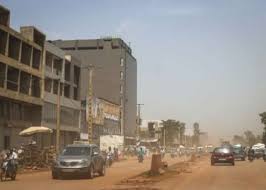
Tap water has been restored to Bamako after several days without supply, following sabotage to a high-voltage electrical line that knocked out power to Mali’s capital and left residents scrambling for alternatives. The disruption, which began on Sunday, exposed the fragility of Bamako’s critical infrastructure at a time when the country is already under severe pressure from a persistent and widening security crisis.
Mali’s drinking water utility SOMAGEP confirmed that the outage was caused by sabotage to the high-voltage line supplying Bamako from the Manantali Dam, a major hydroelectric facility located on the border with Senegal and Mauritania. With no electricity reaching the capital, SOMAGEP’s water systems could not function, leaving taps dry across the city. The utility said it has since secured enough fuel to get its systems running again, though the electrical grid continues to face significant disruption.
During the days without tap water, residents turned to solar-powered boreholes as the only available alternative. The situation inside Bamako District Hospital was particularly alarming. An official from the facility revealed that patients had been forced to drink water drawn from the hospital’s borehole, a source normally reserved for hygiene purposes only. “With the taps dry for two days, what choice did we have? Not everyone can afford bottled water,” the official said. The hospital advised patients to add bleach to the borehole water as a precautionary measure. “Fortunately, we advised everyone to add bleach, which spared us from further problems,” the official added. That a hospital in a capital city was in this position at all is a measure of how seriously the sabotage disrupted essential services.
The timing and target of the sabotage are significant. The attack on the Manantali power line comes as al Qaeda-linked jihadist groups continue to blockade key routes leading into Bamako, a strategy designed to isolate the capital and squeeze its supply chains. Disrupting the power line feeding the city fits within that broader pattern of pressure, whether or not the sabotage was carried out by the same actors. The effect, in any case, was to compound the difficulties already being imposed on Bamako’s residents by the ongoing security situation.
Mali has been grappling with intersecting security crises since 2012, facing insurgencies from jihadist groups, armed gangs, and separatist movements that have progressively eroded state control over large parts of the country. The military government that took power in a coup has repositioned Mali’s alliances away from France and toward Russia, but the security situation has not stabilised. If anything, the front lines of the conflict have crept closer to the capital in recent months, with the blockade of supply routes and now the sabotage of critical infrastructure signalling that Bamako itself is no longer insulated from the wider instability.
Water is back on for now. But the vulnerability that this episode exposed has not been addressed. A capital city whose water supply can be cut off by an attack on a single power line, and whose hospital was rationing borehole water mixed with bleach for its patients, is a city operating without adequate resilience. For the people of Bamako, the restoration of tap water is a relief. The broader situation that made the crisis possible remains very much in place.









Leave a comment