


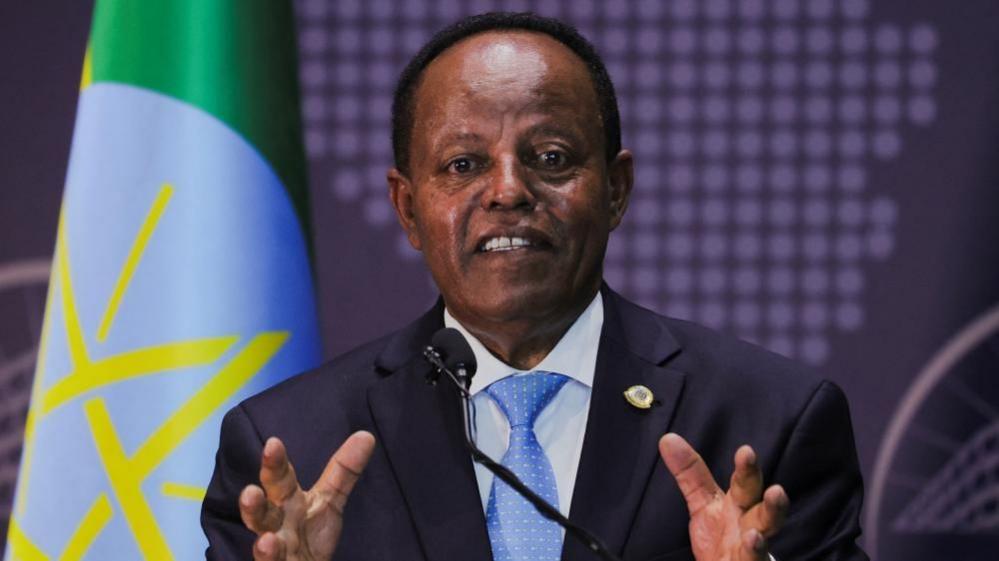
Taye Astke Selassie has been sworn in as Ethiopia’s new president following parliamentary approval, replacing Sahle-Work Zewde, the country’s first female president. Known for his extensive diplomatic experience, Taye assumes this largely ceremonial role at a crucial time for Ethiopia, which continues to face internal challenges and regional instability. His appointment follows political disagreements between his predecessor and Prime Minister Abiy Ahmed, highlighting the often-complicated dynamics within Ethiopia’s leadership.
Though the president in Ethiopia holds a symbolic position with limited executive power—most of which resides with the prime minister—Taye’s appointment signals potential shifts in Ethiopia’s approach to both domestic and regional issues. Taye, 68, is no stranger to Ethiopia’s political landscape. He has served as the country’s foreign minister since February 2024 and previously represented Ethiopia at the United Nations and in Egypt, building a strong reputation as a veteran diplomat. His close relationship with Abiy Ahmed suggests that his presidency may align closely with the government’s broader objectives.
In his inaugural address, President Taye emphasized his commitment to fostering peace and ensuring the rule of law within Ethiopia. He declared that protecting the constitutional system and safeguarding citizens’ peace and security would be central to his presidency. His focus on peace is particularly pertinent, given Ethiopia’s recent history of conflict, including the devastating civil war in the Tigray region, which formally ended with a peace agreement in 2022 but left deep scars on the nation.
“The doors of peace remain wide open,” Taye said, indicating that the government is committed to inclusive dialogue and reconciliation efforts. His remarks reflect a broader aspiration to build a sustainable peace that addresses the root causes of Ethiopia’s internal conflicts. This approach aligns with Ethiopia’s long-term goals of political stability and social cohesion, both of which are vital to the nation’s development.
Taye’s presidency may also influence Ethiopia’s role in regional peacebuilding efforts. As a diplomat with experience navigating the complexities of international relations, he is well-positioned to support Ethiopia’s engagement in resolving conflicts in the Horn of Africa. The region has been plagued by various challenges, including the war in Sudan, instability in Somalia, and the lingering effects of the Ethiopian civil war. Taye’s background and expertise could prove valuable in advancing Ethiopia’s position as a key player in regional peace processes.
Under Ethiopia’s political framework, the president is elected by the Federal Parliamentary Assembly for a six-year term and can serve up to two terms. While the role is largely symbolic, experts believe that Taye’s diplomatic acumen may allow him to wield influence in ways that go beyond traditional ceremonial duties. His experience, both domestically and internationally, could enable him to serve as a bridge between Ethiopia’s internal factions and external actors interested in regional stability.
In replacing Sahle-Work Zewde, Taye inherits a position that is increasingly scrutinized for its capacity to influence Ethiopia’s peace trajectory. Sahle-Work’s departure comes amid reports of disagreements with Prime Minister Abiy Ahmed, whose administration has faced significant challenges in reconciling the country’s diverse political interests.
As Ethiopia continues to navigate its path toward peace, Taye’s presidency will likely play a critical role in supporting the government’s ongoing efforts to stabilize the nation and foster regional cooperation. His extensive diplomatic experience and alignment with the current administration suggest that his presidency could help steer Ethiopia toward a more peaceful and unified future.










Leave a comment