


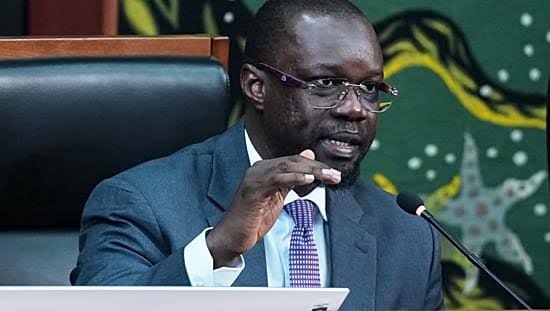
Senegal’s National Assembly has rejected the government’s revised 2026 budget, dealing a setback to efforts to secure a $2.2 billion financing programme from the International Monetary Fund (IMF).
The amended budget was rejected on Tuesday, November 3, after lawmakers from the ruling Pastef party, led by National Assembly President Ousmane Sonko, voted against it. The latest count showed 126 lawmakers voted against the proposal, 20 supported it, while three abstained. Reuters+1
The rejection deepens a political standoff between Sonko and President Bassirou Diomaye Faye’s government. Sonko’s party controls parliament and has opposed the revised budget, arguing that it does not adequately address the country’s economic challenges, including the rising cost of living.
The disagreement threatens to delay approval of the proposed IMF programme, which is intended to support Senegal’s debt restructuring and restore access to external financing. The country reached a staff-level agreement with the Fund in September, but the programme still requires approval by the IMF Executive Board. Reuters+1
Senegal’s debt reached an estimated 132 per cent of gross domestic product by the end of 2024, following the discovery of billions of dollars in previously undisclosed government borrowing. The revised budget also lowered projected economic growth to 2.7 per cent and raised the projected fiscal deficit to 7.6 per cent of GDP. Reuters+1
The budget deadlock adds to economic pressures in the country, where high youth unemployment and rising living costs have fuelled public discontent.







Leave a comment