


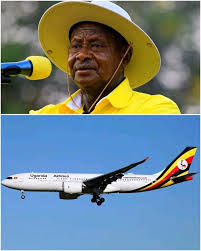
Uganda has begun bringing its citizens home from South Africa, with 273 nationals touching down at Entebbe International Airport in the early hours of Friday aboard a special Uganda Airlines charter flight. The arrival marks the first phase of a government-led voluntary repatriation programme launched in response to rising anti-illegal immigration protests and xenophobic violence that have shaken migrant communities across South Africa in recent weeks.
The returnees were welcomed at Entebbe by Acting Foreign Affairs Minister Haruna Kasolo and Uganda’s High Commissioner to South Africa, Paul Amoru, who travelled back on the same flight with the evacuees. Kasolo praised the coordination effort by the Ugandan mission in South Africa and the various government agencies involved, describing the operation as a meaningful step toward protecting citizens caught up in the unrest. The evacuation was carried out on the direct orders of President Yoweri Museveni, who directed that all costs associated with the operation be covered by the government.
The exercise is being coordinated across multiple government institutions, including the Ministry of Foreign Affairs, the Office of the Prime Minister, the Ministry of Internal Affairs, the Ministry of Works and Transport, and the Ugandan High Commission in South Africa. More than 800 Ugandans have registered for the programme so far, though earlier estimates put the number of those seeking assistance at around 1,200. High Commissioner Amoru confirmed that additional groups of returnees were already boarding further flights and would continue arriving in Uganda over the coming days.
For those who made the journey on Friday’s flight, the return home came at a significant personal cost. Harriet Namukwaya described waiting anxiously after word spread that a government aircraft had been arranged. Paddy Ddumba was more direct about what he had left behind. He said the evacuation had forced him to abandon his business, his property, and his family in South Africa, a sacrifice that captures the impossible choices facing migrants who had built lives in the country but found themselves unable to remain safely.
A practical obstacle has complicated the repatriation process for a number of those wishing to return. Ugandan officials confirmed that many citizens seeking evacuation lacked valid travel documents or held expired passports. Emergency travel certificates have been issued to allow them to board the flights home, a logistical challenge that has added complexity to an already demanding operation.
The broader picture across South Africa is one of accelerating departures. According to South African security authorities, more than 25,000 foreign nationals have already left the country since the wave of anti-migrant protests intensified. The demonstrations, which called for stricter immigration enforcement and the removal of undocumented foreign nationals, spread across parts of the country and triggered fear among migrant communities from across the African continent. Uganda now joins Ghana and Nigeria among the African governments that have organised voluntary repatriation programmes for their citizens in response to the unrest.
The Ugandan government has stated clearly that the repatriation exercise will continue until every Ugandan who wishes to leave South Africa has been safely brought home. That commitment, backed by presidential authority and coordinated across multiple ministries, reflects an understanding that the scale of the crisis demands a sustained response rather than a single symbolic gesture. For the families waiting at Entebbe and the citizens still making their way to departure points in South Africa, that commitment is not an abstraction. It is the difference between being stranded and being brought home.






Leave a comment