


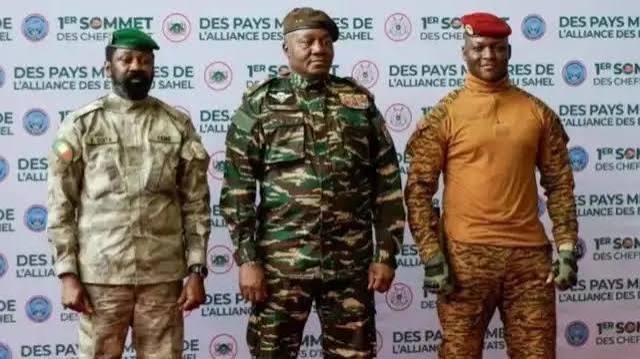
Burkina Faso, Mali and Niger have officially initiated their withdrawal from the International Criminal Court, the ICC has confirmed, beginning a year-long process that will formally sever the three military-led nations from the Hague-based tribunal. The three countries, which first signalled their intention to leave in September, have now triggered the legal mechanism for departure under the Rome Statute, the founding treaty that established the court.
The decision is consistent with the broader trajectory of the three Sahel states since their respective military governments came to power. All three have cut ties with former colonial power France and distanced themselves from many Western nations and institutions. They established the Alliance of Sahel States in 2024, forming a confederation that has increasingly turned to Russian mercenaries for military support in the face of persistent jihadist insurgencies. Their departure from the ICC fits within that pattern of deliberate disengagement from Western-aligned multilateral institutions.
In announcing their intention to leave, the three governments denounced the ICC as a tool of neocolonial repression, a characterisation that resonates within a particular strand of African political thought and has been voiced by other African governments in the past, most notably during a wave of withdrawal threats and actual departures in the mid-2010s. The argument holds that the court disproportionately pursues African leaders while shielding powerful Western nations and their allies from accountability. Critics of that position counter that the court’s caseload reflects the referrals it receives and the situations it is mandated to investigate, rather than a systematic bias against the continent.
The ICC currently has 125 member states. Several of the world’s most powerful nations, including China, India, Russia, the United States and Israel, have not joined the court or have withdrawn from the Rome Statute. The departure of Burkina Faso, Mali and Niger adds three more names to the list of non-members, though their individual strategic weight is limited compared to the major powers that have stayed outside the court’s jurisdiction from the beginning.
The court itself was direct in its response. Departures from the Rome Statute, it said, risk undermining the collective pursuit of justice and weakening global efforts to end impunity. That statement reflects a genuine institutional concern. The ICC’s authority rests entirely on the voluntary participation of member states, and each withdrawal, whatever its individual motivation, represents a narrowing of the court’s reach and a reduction in the political consensus that sustains it.
For the populations of Burkina Faso, Mali and Niger, who have endured years of jihadist violence, military governance, and in some cases documented abuses by the very security forces now ruling their countries, the withdrawal carries a particular significance. The ICC was never a perfect or easily accessible instrument of justice for ordinary citizens in conflict-affected regions. But its existence represented at least the principle that individuals, including heads of state and military commanders, could be held accountable for the most serious crimes. The withdrawal of their governments from that framework is, at minimum, a step away from that principle and toward a world in which accountability mechanisms are further out of reach.










Leave a comment