



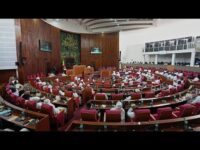
Lebanon’s parliament voted on Monday to extend its own mandate by two years, citing the escalating conflict between Israel and Hezbollah that has displaced hundreds of thousands of people and made holding elections across much of the country effectively impossible. Parliamentary elections had been scheduled for May.
Lebanon’s state news agency reported that 76 legislators voted in favor of the extension, 41 voted against, and four abstained. Hezbollah’s 13-member parliamentary bloc voted in favor.
The ongoing conflict, which intensified last week, has displaced over half a million people, creating conditions that Lebanese lawmakers argued made a free and fair vote impossible in large parts of the country. On the same day as the vote, the Israeli military said it was targeting Hezbollah’s financial arm, al-Qard Al-Hasan, while its ground forces in Lebanon’s south conducted what it described as “focused raids” against the group’s infrastructure.
The decision is not without precedent in Lebanese politics. While parliamentary terms are constitutionally set at four years, the parliament elected in 2009 extended its own mandate on three separate occasions, delaying the next election until May 2018. Critics, however, have long argued that such self-extensions entrench the existing political class and delay democratic accountability in a country where public trust in institutions is already severely strained.
The vote comes at a particularly turbulent moment for Lebanon. The country is still recovering from the economic collapse that began in 2019, the aftermath of the devastating 2020 Beirut port explosion, and years of political gridlock. Lebanon only resolved a prolonged presidential vacancy in January 2025, when Joseph Aoun was elected president. His election, along with the appointment of Prime Minister Nawaf Salam, was widely seen as a sign of Hezbollah’s diminished political influence following its military losses.
The two-year extension means parliamentary elections, if held on schedule, would now take place in 2028. Opposition lawmakers who voted against the measure are expected to challenge the decision, arguing that extending the mandate undermines Lebanon’s fragile democratic institutions at a moment when the country urgently needs political renewal.








Leave a comment