


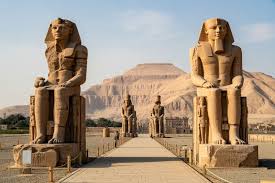
Egypt has unveiled the restored Colossi of Memnon in the southern city of Luxor, marking the completion of a painstaking archaeological project that has spanned nearly two decades. The revival of the two massive alabaster statues is the latest in a series of high profile heritage events designed to strengthen Egypt’s appeal as one of the world’s leading cultural tourism destinations.
The towering statues represent Pharaoh Amenhotep III, one of ancient Egypt’s most powerful rulers, who reigned around three thousand four hundred years ago during a period of extraordinary prosperity and artistic achievement. Originally erected at the entrance of his vast funerary temple on the west bank of the Nile, the colossi have long stood as silent witnesses to Egypt’s ancient grandeur, even as much of the surrounding temple fell into ruin over the centuries.
Speaking ahead of the unveiling ceremony, Mohamed Ismail, Secretary General of Egypt’s Supreme Council of Antiquities, described the moment as a significant milestone. He said the restoration and reassembly of the statues not only preserved invaluable heritage but also helped scholars and visitors better understand the original scale and splendor of Amenhotep III’s funerary complex. According to Ismail, the project aimed to recreate how the temple would have appeared in antiquity, offering a clearer picture of ancient Egyptian architectural vision.
Luxor, often described as the world’s greatest open air museum, is home to some of Egypt’s most celebrated archaeological treasures, including the Valley of the Kings and the temples of Karnak and Luxor. The renewed Colossi of Memnon add further weight to the city’s status, reinforcing its importance as a focal point of both historical research and tourism.
Egyptian authorities see such restorations as central to reviving the tourism sector, which has faced repeated challenges in recent years. By showcasing carefully restored monuments and hosting high profile archaeological unveilings, the government hopes to attract new waves of international visitors while reaffirming Egypt’s role as a guardian of one of humanity’s richest ancient civilizations.
The restoration of the Colossi of Memnon stands as both a cultural achievement and a strategic investment, linking Egypt’s ancient past with its modern ambitions to preserve heritage, educate the world and strengthen its tourism driven economy.











Leave a comment