


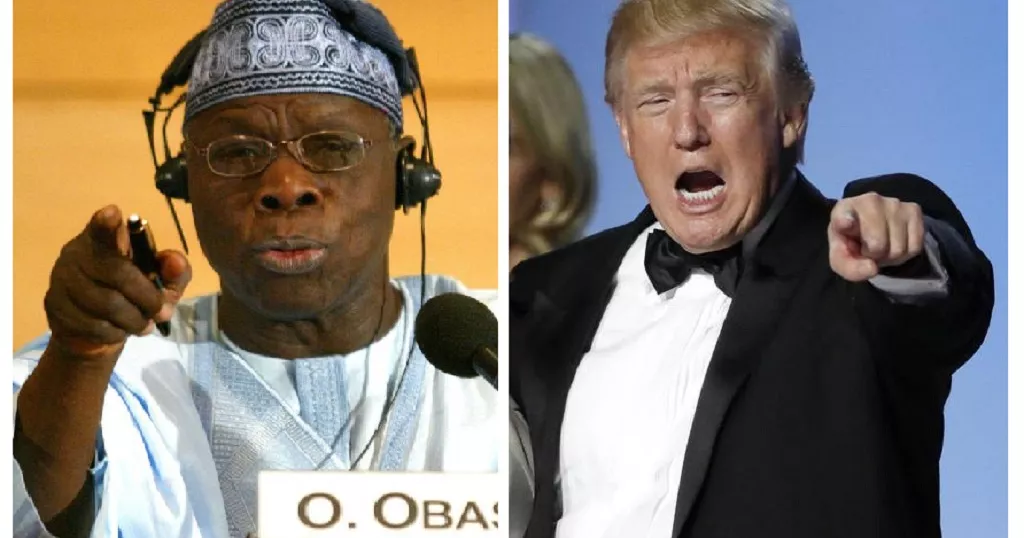
Former Nigerian President Olusegun Obasanjo has responded to recent comments by U.S. President Donald Trump, asserting that during his administration, the United States held Nigeria in high regard and respected its influence across Africa.
Speaking in Abeokuta, Ogun State, at the Presidential Youth Mentorship Retreat (6.0) organized by the Youth Development Centre of the Olusegun Obasanjo Presidential Library (OOPL), Obasanjo addressed the controversy surrounding Trump’s threat to send American troops to Nigeria over alleged killings of Christians by jihadist groups.
Trump’s remarks have ignited heated reactions across Nigeria. While some citizens praised his concern for human rights, the Nigerian government dismissed his statement, emphasizing that the country’s security challenges affect all ethnic and religious communities.
Although Obasanjo did not mention Trump by name, he indirectly criticized the current state of Nigeria’s global image, recalling a time when the U.S. and other nations consulted Nigeria on major African affairs.
“When I was President and Head of State, three American presidents visited Nigeria,” Obasanjo said. “They didn’t need permission from us, but they respected Nigeria enough to tell us before making any major move in Africa. Back then, the U.S. saw Nigeria as a strong and reliable partner.”
Obasanjo reflected on his close friendship with the late President Jimmy Carter, noting that the U.S. once viewed Nigeria as the voice and power of Africa. “At Independence, the world saw Nigeria as a giant rising. We lost that image for a while, but when Murtala and I came into government, we restored it,” he stated.
The former president, who earlier in 2025 held a memorial in honour of Jimmy Carter, described the late American leader as “a true friend of Nigeria and Africa.”
Trump’s comments about deploying U.S. troops to Nigeria have since drawn condemnation from diplomatic circles and political leaders, who view his statement as interference in Nigeria’s internal affairs. The debate continues to highlight tensions between both nations over security, governance, and international relations.





Leave a comment