


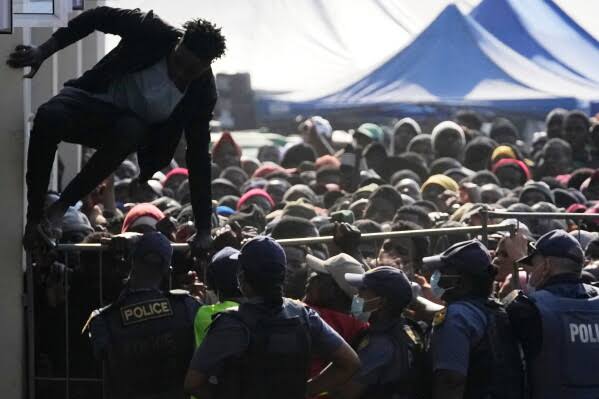
More than 3,500 Malawian nationals have been repatriated or deported from South Africa in recent weeks, as the country continues to grapple with a deepening crisis over illegal immigration that has strained relations between South African locals and foreign nationals living in the country.
Stella Ndau, Malawi’s High Commissioner to South Africa, provided a breakdown of the numbers. “Since the repatriation started, we have 1,549 that have arrived in Malawi. We have about 1,260 that are en route, and we also have 700 that were deported, so in total we have 3,509 Malawians that have been repatriated and also with the assistance of the South African government, 700 that have gone to Malawi,” she said. The figures paint a picture of a process that is large in scale but still unfolding, with thousands more Malawians yet to complete the journey home.
At the centre of the crisis is a deportation facility in the Sherwood area of Durban, where an estimated 10,000 Malawians have been camping for more than a week, waiting to be processed and sent home. The conditions at the site have been difficult, with women and young children packed into an overcrowded space alongside thousands of men. South Africa began constructing a second temporary deportation centre on Thursday to ease the pressure, with authorities hoping the additional facility will help manage the volume of people more humanely and efficiently.
For those caught up in the process, the experience has been deeply unsettling. Pearson Kaunda, a Malawian national who has lived in South Africa for more than ten years, told the Associated Press that the situation had become unbearable. “South Africa, I’m telling you, is so bad just now. So we’re supposed to go home. You can’t live here like that,” he said. His words reflect the feelings of many long-term residents who, whatever their documentation status, had built lives in South Africa and are now leaving under circumstances they did not choose.
The deportation process has not been straightforward. South African officials have stated that Malawians in the country illegally are required to appear in court before being deported, adding a legal layer to an already complex logistical operation. Progress has also been slowed by an insufficient number of buses provided by the Malawian government to transport returnees home, a shortfall that has contributed to the backlog at the Durban facility. The Malawian government has gone as far as requesting donations to help fund the transportation of its citizens back across the border.
The repatriation effort follows months of rising tension in South Africa over illegal immigration, which came to a head earlier this year when thousands of protesters took to the streets in Johannesburg and other parts of the country. Anti-migrant sentiment has been building for some time, and foreign nationals in several communities have reported fear of violent attacks. South African and Malawian authorities say they have been coordinating closely to manage the situation and facilitate the safe return of Malawian citizens.
Malawi is the latest in a growing list of African countries to organise or facilitate the return of their citizens from South Africa under these circumstances. At least two other nations have undertaken similar exercises in recent months as the pressure on foreign nationals in the country has intensified. The pattern raises broader and uncomfortable questions about the conditions that drive migration within the African continent, the obligations of host countries toward long-term foreign residents, and the responsibility of home governments toward citizens who left in search of opportunity and are now returning to countries that may not be ready to receive them in large numbers.
For now, the buses are running, the courts are processing, and thousands of Malawians are making a journey home that many of them did not plan to make. The crisis in Durban is a human story unfolding in real time, and its full consequences, for those returning and for the countries involved, will take time to become clear.





Leave a comment