
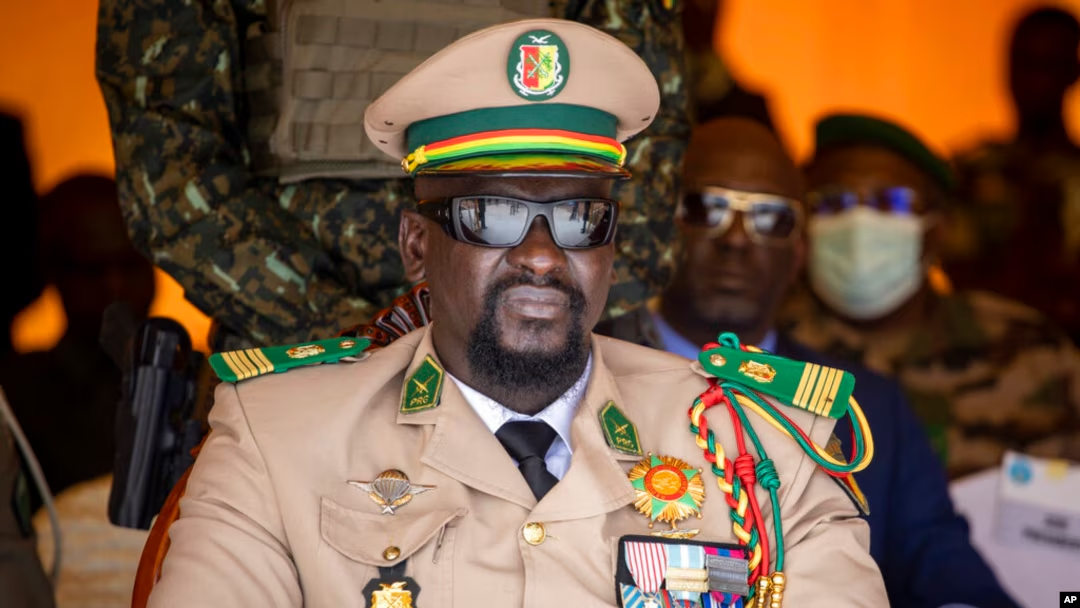
Guinea’s capital, Conakry, erupted in a frenzy of campaign rallies, concerts, Quran readings, and public prayers on Thursday as the country prepared for a crucial referendum that could open the door for junta leader Colonel Mamadi Doumbouya to extend his hold on power. Streets were clogged with trucks carrying crowds of supporters dressed in colorful T-shirts and traditional boubous printed with Doumbouya’s face, while buildings were plastered with billboards urging citizens to vote “Yes.” Yet, in this fevered atmosphere, one voice was conspicuously absent: the opposition.
On Sunday, some 6.7 million registered voters are expected to cast ballots in a referendum on a draft constitution that would mark a key step in Guinea’s transition from military to civilian rule. To pass, the referendum requires at least 50% voter turnout. But the political atmosphere suggests a one-sided campaign, with state-controlled messaging leaving no space for dissenting voices. Opposition parties, silenced by suspensions, dissolutions, and media restrictions, have called for a boycott, branding the exercise a disguised attempt by Doumbouya to legitimize his continued rule after seizing power in a 2021 coup.
The draft constitution at the center of the referendum extends presidential terms from five to seven years, renewable twice, and creates a Senate with one-third of its members appointed directly by the president. Crucially, it also allows junta members to contest elections—contradicting Doumbouya’s earlier promise that he would not run for president. While the colonel has not officially declared his candidacy, he remains the central figure of the campaign, praised in songs as “the new sun which shines over Guinea” and celebrated in public gatherings that bear all the hallmarks of a presidential push.
Supporters say the referendum is about institutional reform, not one man. At community rallies, merchants, neighborhood leaders, and everyday Guineans express trust in Doumbouya and optimism for change. Some describe the new constitution as a way to strengthen legislative power and stabilize governance. But critics see it differently, accusing the junta of tightening its grip on society through censorship, intimidation, and repression. Human Rights Watch and Reporters Without Borders have documented a pattern of abuses, including the disappearance of opponents, the arrest of journalists, the suspension of critical radio stations and websites, and the restriction of social media platforms. Literacy rates remain low, meaning most citizens rely on state-driven narratives, further narrowing public debate.
The Directorate General of Elections, a newly created body whose leadership was handpicked by Doumbouya, will oversee the vote and the counting process. Opposition leaders in exile, such as Cellou Dalein Diallo, denounce the referendum as a “masquerade” designed to legitimize what they call a coup d’état. Last year, the military regime dissolved more than 50 political parties, claiming the need to “clean up the political chessboard.” In recent weeks, the three largest opposition parties were suspended outright, preventing them from holding rallies or campaigning against the draft constitution.
The broader context adds to the stakes. Guinea, despite being rich in bauxite, gold, and other natural resources, struggles with deep poverty and widespread food insecurity, affecting more than half its 15 million citizens. Like neighboring Mali, Niger, and Burkina Faso—also ruled by military juntas—Guinea faces intense pressure from regional and international actors to return to democratic governance. Yet the draft constitution suggests a longer roadmap for Doumbouya and raises the possibility that his December presidential election could mark the beginning of a new, extended era of military-aligned rule.
As Guineans prepare to vote, the country is divided between those who see Doumbouya as a stabilizing leader and those who fear he is entrenching himself in power. With opposition silenced and dissenting voices muted, the referendum appears less a democratic milestone than a referendum on Doumbouya himself an exercise that could determine the political trajectory of Guinea for years to come.




Leave a comment