


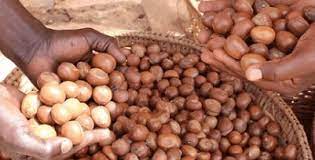
Nigeria has announced a six-month ban on the export of raw shea nuts in a bold move to strengthen its position in the multi-billion-dollar global shea butter market. The decision, revealed by Vice-President Kashim Shettima at State House in Abuja, is aimed at transforming the country from a raw material exporter into a major global supplier of refined shea products.
Despite producing nearly 40% of the world’s annual shea nut crop, Nigeria currently accounts for just 1% of the $6.5 billion global shea industry. The vice-president described this situation as “unacceptable,” stressing that the policy is not only about industrialisation but also rural transformation, gender empowerment, and expanding Nigeria’s global trade footprint.
Shea butter, extracted from the nuts of shea trees that grow widely across the African “shea belt,” is a highly sought-after commodity in cosmetics, pharmaceuticals, and the food industry, used in chocolates, ice creams, and other products. However, much of Nigeria’s production is sold raw and cheaply to buyers, with small-scale farmers—often women—losing out on potential income due to a lack of regulation and processing facilities.
Agriculture Minister Abubakar Kyari noted that Nigeria produces about 350,000 tonnes of shea nuts annually, with nearly a quarter lost to unregulated cross-border trade. Experts say this has left farmers vulnerable to exploitation, as many are unaware of the true value of the crop. Dr Ahmed Ismail, an agriculture expert from the Federal University of Minna, welcomed the ban, saying it should have been implemented years ago. He emphasized that local refining would not only create jobs and empower rural communities but also significantly increase government revenue.
The government’s short-term target is to grow Nigeria’s shea industry earnings from $65 million to $300 million annually. The ban is expected to encourage investment in local processing facilities, strengthen regulation, and help smallholder farmers capture more value from their labour while positioning Nigeria as a competitive force in the global shea butter market.












Leave a comment