


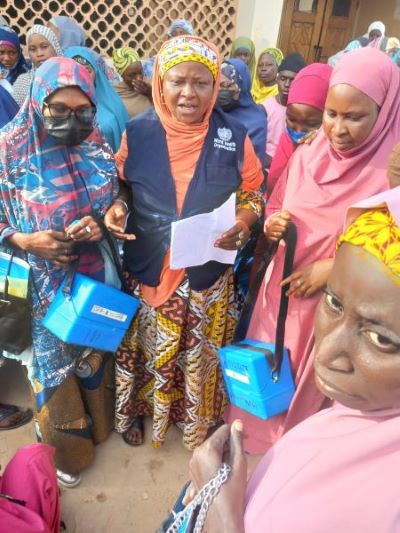
In the quiet but determined streets of Kado Lifecamp on the outskirts of Nigeria’s capital, Abuja, 29-year-old health worker Eucharia Joseph begins her day with a cooler box full of life-saving oral polio vaccines packed in ice. Walking through dusty lanes lined with tin-roofed houses, passing mosques and churches, she and her team of six women set out to vaccinate hundreds of children before sunset. Their mission is urgent and deeply personal: to ensure no child remains vulnerable to the crippling disease that once devastated thousands across the nation.
In 2020, Nigeria achieved a historic milestone when the World Health Organisation declared the country free of wild poliovirus a breakthrough for a country that had once been the epicentre of global transmission. But victory has not been absolute. A dangerous strain known as circulating vaccine-derived poliovirus (cVDPV) continues to threaten under-immunised communities. Unlike the wild virus, cVDPV develops when the weakened virus from oral vaccines mutates in environments with low vaccination coverage, spreading through contaminated food or water.
The numbers remain concerning. As of March this year, Nigeria reported 10 cases of cVDPV, while last year saw 98 confirmed cases. The challenge of eradicating polio now lies heavily on the shoulders of community health workers especially women who are often the only ones able to access households in certain parts of the country due to cultural norms, religious sensitivities, and security concerns.
For Joseph, this work is more than a job it’s a calling. “It’s my gift,” she says, adjusting her headscarf under the hot sun. “I go to different localities, I talk to mothers, I sit with them, I know how to convince them. That’s what makes this work possible.”
In rural and conservative communities, male health workers are often barred from speaking to women or interacting with children. In conflict-affected areas, such as Borno State, long at the centre of the Boko Haram insurgency strange men moving between households are met with suspicion, with some accused of working for security forces. This mistrust has made female vaccinators like Joseph and her colleagues the backbone of Nigeria’s polio campaign.
However, their work is not without challenges. Misinformation continues to undermine vaccination efforts. In Maiduguri, community health worker Aishatu explains that some residents believe polio vaccines cause infertility. Such myths often spread through social networks, misinterpreted religious teachings, and even propaganda from armed groups have persisted for years. Boko Haram has attacked vaccinators in the past, framing immunisation campaigns as foreign plots against local communities.
Persistent rumours range from claims that vaccines are forbidden during certain religious festivals to conspiracy theories alleging that they are part of a Western plan to sterilise African children. Combined with long-standing distrust of government programmes in some areas, these narratives have made vaccine acceptance a major hurdle.
For Aishatu and many like her, the solution is relentless community engagement. “We handle it by trying to increase sensitisation,” she says. Through repeated home visits, one-on-one discussions, and informal group gatherings, these women work tirelessly to counter myths and build trust. “We keep talking to the mothers, telling them the truth. Some accept it slowly, some after seeing others take it.”
As Nigeria pushes forward in its fight against polio, women on the front lines remain an irreplaceable force armed not only with vaccines but also with patience, cultural understanding, and a deep commitment to protecting the next generation from a disease that should never return.








Leave a comment