


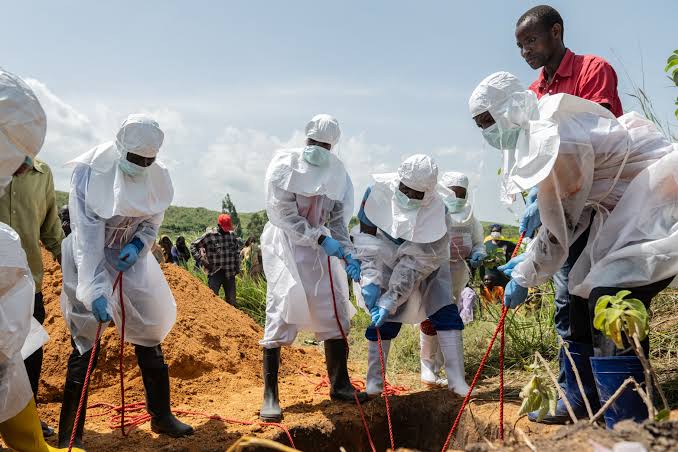
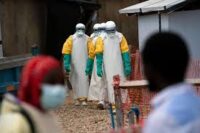
The Ebola outbreak in eastern Democratic Republic of Congo has crossed a deeply troubling threshold. Confirmed cases have reached 1,003, with 254 deaths recorded, according to a statement issued by Congo’s Ministry of Health late Sunday. At least 365 patients remain hospitalised or in isolation. While 100 people have recovered since the outbreak was declared on 15 May, officials are openly acknowledging that the worst is almost certainly still ahead.
The rare Bundibugyo virus causes the outbreak, a strain of Ebola for which there are currently no approved vaccines or treatments. In its first month alone, it became the worst Bundibugyo outbreak ever recorded. More than five weeks in, the disease continues to outpace the response, and officials admit there could be far more cases than the confirmed figures suggest, with the true scale of the outbreak still unknown.
Contact tracing sits at the centre of the response problem. Local authorities have achieved only a 55 percent coverage rate, a figure that reveals just how much of the outbreak’s spread remains invisible to health teams. As of last week, more than 35,000 people identified as having had contact with infected individuals still needed to be traced and monitored. Officials have not yet identified the outbreak’s index case, the original patient from whom the chain of transmission began, leaving a fundamental gap in their understanding of how and when the virus first entered the human population. Africa Centres for Disease Control and Prevention Director-General Dr. Jean Kaseya put it plainly last week: “If you want to control an outbreak, especially an Ebola outbreak, you must know the index case. We don’t have confidence on when this outbreak started.”
The contact tracing shortfall is not simply a logistical failure. It is a direct consequence of the environment in which health teams are operating. Eastern Congo’s Ituri province, where the outbreak is concentrated, is also an active conflict zone. Attacks by the Allied Democratic Force, an armed group backed by the Islamic State, have cut off access to many villages, forcing large numbers of people to flee their homes. Some are sheltering in overcrowded camps. Others are constantly on the move. Both situations are precisely the conditions under which a virus like Ebola spreads most effectively and becomes most difficult to track. The interplay between the outbreak and the conflict is not incidental. It is one of the central reasons the response is struggling.
Health workers on the ground face an additional and deeply disturbing challenge: violence from the communities they are trying to protect. Anger over the public health measures imposed to limit transmission has, in some cases, turned physical. Early in the outbreak, a hospital in Rwampara was set on fire by protesters who had been denied access to the bodies of relatives who had died from Ebola. The restriction exists for sound epidemiological reasons: the body of an Ebola victim carries an extremely high viral load and poses a severe transmission risk. But grief does not process public health rationale easily, and the burning of that hospital was a warning that community trust cannot be assumed and must be actively and continuously built.
The combination of factors at work in Ituri right now represents one of the most difficult outbreak response environments imaginable. An untreatable virus. No identified index case. A 55 percent contact tracing rate. An active armed conflict blocking access to affected communities. Overcrowded displacement camps amplifying transmission risk. And communities whose distrust of health authorities is, in some cases, translating into direct attacks on the workers trying to contain the spread.
One thousand confirmed cases is a number that demands urgent and sustained international attention. But the figures that matter most right now may be the ones that cannot yet be counted: the cases still undetected, the contacts still untraced, and the communities still unreached. Until those gaps close, the outbreak will continue to move faster than the response. And in eastern Congo today, that gap remains very wide indeed.






Leave a comment