


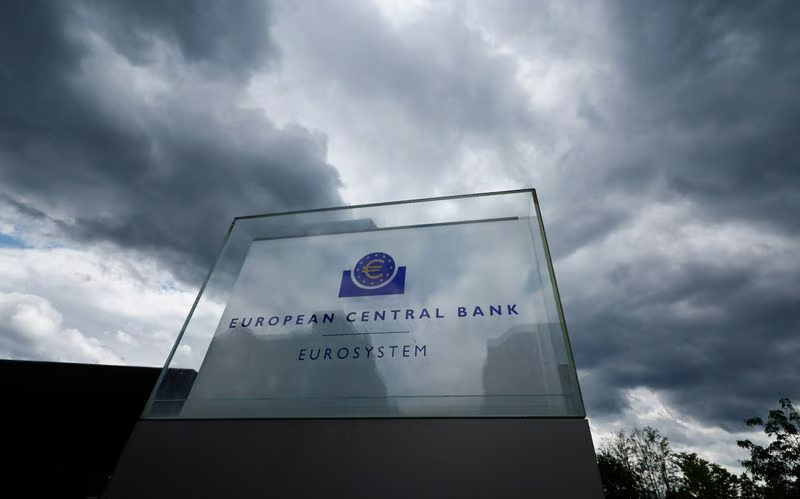
The European Central Bank is set to streamline and accelerate the approval process for changes to banks’ internal capital risk models, in a move aimed at reducing regulatory delays and easing administrative burdens on lenders.
Under the current framework, banks must obtain prior approval for any significant modification to their internal credit risk models, a process that can involve lengthy reviews, on site inspections, and the requirement to run both old and new models simultaneously. This has often delayed the ability of banks to benefit from updated risk calculations.
The new approach, which is expected to take effect from October 2026, will allow banks to implement model changes shortly after submitting their applications. Fewer changes will automatically trigger on site investigations, with the ECB instead focusing detailed scrutiny on higher risk or more complex cases.
While banks will be able to adopt updated models more quickly, the ECB said that any reduction in capital requirements resulting from lower risk estimates will be temporarily capped until a full supervisory assessment is completed. This ensures that prudential safeguards remain in place even as processes are sped up.
The reform is part of a broader effort to make eurozone banking supervision more efficient and risk based. Alongside the ECB changes, updated guidelines from the European Banking Authority are also narrowing the definition of what constitutes a “material” model change, meaning fewer adjustments will require formal approval.
Analysts say the move could improve banks’ operational flexibility and reduce compliance costs, while allowing regulators to concentrate resources on areas of greater systemic risk. The ECB, which supervises more than 100 of the eurozone’s largest banks, emphasized that it retains the option to revert to stricter procedures in sensitive cases.
The changes highlight an ongoing shift toward more streamlined and targeted financial oversight in Europe, as regulators seek to balance stability with efficiency in an increasingly complex economic environment.













Leave a comment