


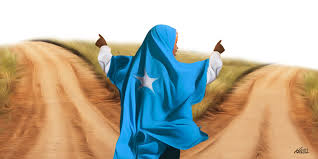
For more than twenty five years, Somalia’s fragile political transitions have not survived by chance. They have been sustained through sustained international engagement, diplomatic pressure, and careful mediation designed to preserve delicate political settlements among deeply divided actors. These arrangements, while imperfect, have helped the country move incrementally away from state collapse toward relative stability. Today, however, Somalia finds itself at a perilous juncture. The federal government’s unilateral pursuit of power, presented under the banner of democratic reform, risks triggering a profound legitimacy crisis that could unravel decades of political progress and erode significant international investment.
Universal suffrage remains an aspiration shared by Somalis across regions, clans, and political affiliations. It represents the promise of inclusive governance, accountability, and national renewal. Yet ideals alone cannot substitute for political realities. Deep and unresolved disagreements among federal member states and political stakeholders, persistent insecurity driven by insurgency, the imminent expiry of the current government’s mandate, and severe financial constraints combine to make the timely and credible implementation of universal suffrage highly unlikely.
Somalia’s political framework has always depended on consensus building rather than unilateral action. Previous transitions were the product of negotiated compromises that reflected the country’s complex social fabric and security environment. Attempts to bypass these processes in the name of reform risk undermining trust between the federal government and federal member states, as well as alienating opposition groups and civil society. Without broad agreement, electoral reforms may be perceived not as democratic progress, but as a mechanism for entrenching power.
Security remains a defining constraint. Large parts of the country continue to face threats from armed groups, limiting freedom of movement, political participation, and voter safety. Conducting credible, nationwide elections under such conditions would be extraordinarily difficult. Any process that excludes significant segments of the population due to insecurity would raise serious questions about legitimacy and fairness.
Equally pressing is the issue of time and mandate. As the government’s tenure approaches its constitutional limit, confidence in state institutions depends on adherence to agreed timelines and legal frameworks. Rushed or unilateral changes to the political roadmap, especially without consensus, could provoke constitutional disputes and deepen political polarisation. History shows that contested transitions in Somalia often lead to prolonged stalemates, institutional paralysis, and, in the worst cases, violence.
Financial realities further complicate the picture. Universal suffrage requires substantial resources for voter registration, electoral infrastructure, logistics, security, and oversight. Somalia’s dependence on donor funding means that any electoral process must also retain the confidence of international partners. A disputed or poorly planned transition risks donor fatigue and withdrawal of support at a time when the country remains heavily reliant on external assistance.
At this critical moment, Somalia’s leaders face a clear choice. They can recommit to inclusive dialogue, consensus based decision making, and realistic sequencing of reforms, or they can pursue a unilateral path that risks destabilising the fragile political order. Democratic reform is not measured solely by ambition, but by legitimacy, inclusivity, and sustainability.
The international community also has a role to play. Continued engagement, principled pressure, and mediation remain essential to prevent backsliding and to protect the political gains achieved at great cost over the past quarter century. Somalia’s future stability depends not on the speed of reform, but on the strength of the consensus that underpins it.






Leave a comment