


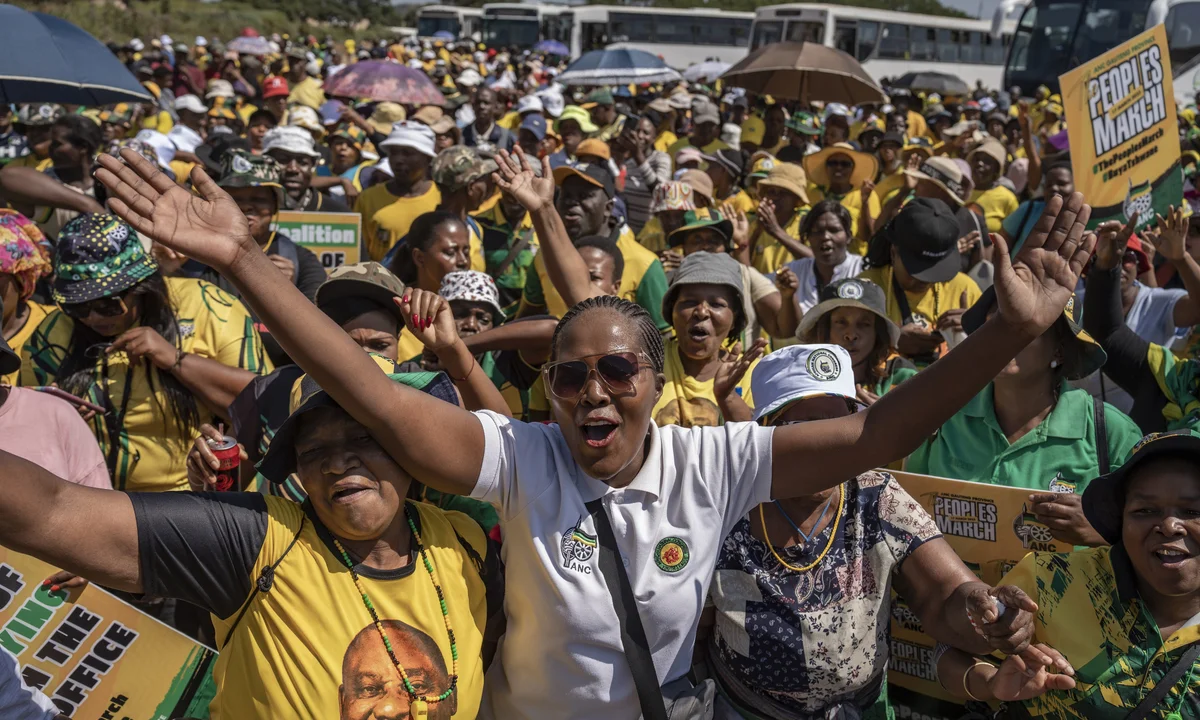
A new Afrobarometer survey has exposed a troubling shift in South Africa’s political mood, showing that fewer than half of citizens now actively support democracy, while an unprecedented number say they would accept military rule. The findings point to a nation increasingly frustrated with the state of governance, service delivery failures, and worsening economic conditions.
The survey, one of Africa’s most comprehensive gauges of public opinion, paints a sobering picture of democratic fatigue in a country once celebrated for its transition from apartheid to majority rule. According to the report, nearly seven in ten South Africans are dissatisfied with how democracy is functioning, citing rising unemployment, persistent poverty, corruption, and crime as key drivers of discontent.
Political analyst Stephen Friedman described the trend as part of a broader global phenomenon. “Around the world, there is a great deal of dissatisfaction with democracy,” he explained. “It’s not that people have stopped believing in democratic values; it’s that the kind of democracy they experience no longer meets their needs.”
Friedman noted that many South Africans feel disconnected from political decision-making, with power concentrated in the hands of a few elites. “The problem with the model of democracy that has been sold to us for the past 30 years is that citizens have very little control over anything,” he said.
Despite the grim picture, the Afrobarometer data also reveals a slight recovery in democratic support since the historic low recorded in 2021, suggesting that while frustration runs deep, the ideal of democracy still holds meaning for many.
However, analysts warn that the growing openness to military rule — a system once unthinkable in South Africa’s democratic landscape — should serve as a wake-up call for leaders. It reflects not only a loss of confidence in political institutions but also a deep yearning for stability and effective governance.
Friedman added that voter apathy is another sign of alienation. “It’s no surprise that many South Africans are choosing not to vote,” he said. “When citizens feel their voices don’t matter, disengagement becomes inevitable.”
The report comes at a time when South Africa faces mounting social and economic pressure, from record-high youth unemployment to rolling power cuts and public sector unrest. Unless tangible reforms are introduced to restore accountability and trust, experts fear the democratic gains of the past three decades could slowly erode.






Leave a comment