


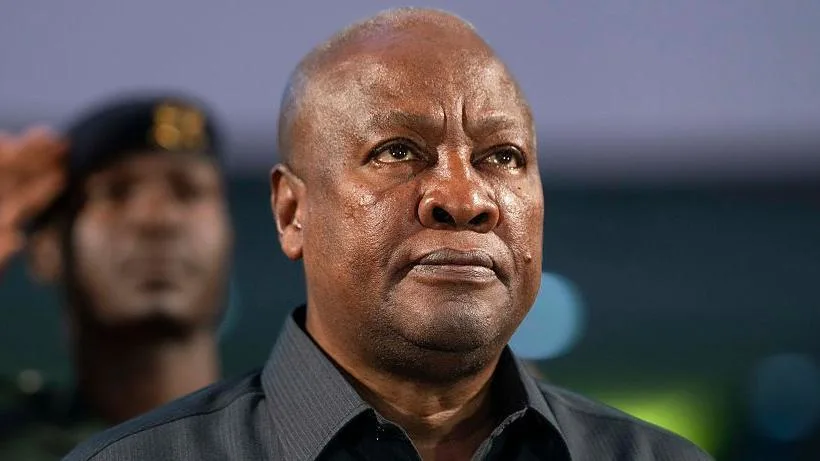
Ghana has become the latest African country to accept migrants deported from the United States as part of former President Donald Trump’s tough crackdown on illegal immigration. The move, confirmed by then-President John Mahama, underscores the growing pressure placed on African nations by Washington to cooperate with its deportation policies while also raising fresh questions about sovereignty, regional cooperation, and human rights.
According to President Mahama, Ghana entered into a bilateral agreement with the United States to temporarily receive deported nationals from various West African countries. He confirmed that 14 people had already arrived in Ghana under the arrangement, including several Nigerians and a Gambian citizen. While Ghana facilitated the return of the Nigerians to their home country by bus, the Gambian was still receiving assistance to continue his journey.
The decision, Mahama said, was guided by the Economic Community of West African States (ECOWAS) free movement protocol, which allows citizens of member states to travel, reside, and work in other West African nations without a visa for up to 90 days. “We were approached by the US to accept third-party nationals who were being removed from the US. And we agreed with them that West African nationals were acceptable,” Mahama stated. “All our fellow West African nationals don’t need visas to come to our country.”
This development comes against the backdrop of a broader US deportation strategy that has seen African countries such as Rwanda, Eswatini, and South Sudan already receive deported migrants in recent months. In July, five people were sent to Eswatini, followed by eight others to South Sudan, while Rwanda accepted seven deportees last month. The Trump administration also approached other African nations to take in deported third-country nationals, intensifying debates about fairness, legality, and respect for international norms.
Rights groups have condemned the US deportation approach, arguing that sending migrants who are not nationals of the receiving country violates their fundamental human rights. Critics have also questioned whether agreements made under pressure undermine the sovereignty of African states, forcing them to act as holding grounds for people with no legal or cultural ties to their soil.
Nigeria, which has openly resisted Washington’s request, has been one of the most vocal opponents of this policy. Officials in Abuja have consistently stated that the country “has enough problems” of its own and cannot accept third-country migrants deported from the US. The Nigerian government has also emphasized that such practices are inconsistent with international law and basic standards of human dignity.
Despite these criticisms, Ghana’s acceptance of deportees reflects both the challenges and opportunities of its relationship with the United States. Mahama acknowledged that Ghana-US ties were experiencing strain due to issues such as increased tariffs on Ghanaian goods and visa restrictions placed on its citizens. Nonetheless, he described the relationship as “positive” overall, though clearly shifting under new political and economic realities.
Observers note that the situation highlights a complex dynamic: while Ghana and other African countries are leveraging regional agreements like ECOWAS to justify accepting deportees, the practice could set a precedent that blurs the line between genuine regional cooperation and external political pressure.
As Washington continues to implement its hardline immigration agenda, more African nations may face the same decision Ghana has made, whether to accept deported migrants from the US despite the controversies surrounding legality, sovereignty, and human rights.









Leave a comment