


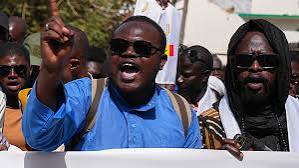
Senegalese workers and trade union members have protested in the capital, Dakar, over rising living costs, declining purchasing power and what unions describe as the government’s failure to honour agreements, ahead of a planned three day general strike.
About 150 people marched on Tuesday, October 20, following a call by trade union federations. The demonstration preceded a 72 hour strike scheduled for October 21 to 23, targeting the public, private and informal sectors.
The unions are demanding measures to ease pressure on household finances, improve wages and working conditions, protect pensions and strengthen social security. They have also called for the implementation of agreements previously reached with the government.
Sara Konaré, secretary general of Senegal’s National Union of Petroleum and Gas Workers, said the mobilisation reflected growing unity among trade unions. She accused the authorities of failing to engage adequately with workers’ concerns.
The planned action follows broader labour discontent over employment conditions, social protection and changes to labour and social security legislation. Union representatives have criticised the adoption of new legislative measures without sufficient consultation with workers’ organisations.
However, the government has questioned the legality of the planned strike, arguing that a single notice submitted to the minister responsible for public service and labour does not meet the separate legal requirements governing industrial action in the public, parapublic and private sectors.
In a statement on Tuesday, the Ministry of Public Service, Labour and Public Sector Reform warned that workers who participate in an unlawful strike could face salary deductions for days not worked and disciplinary sanctions. It urged union leaders to continue negotiations rather than proceed with the action.
The dispute comes as Senegal prepares to host the Youth Olympic Games, scheduled to begin in Dakar on October 31. The timing has raised concerns about potential disruption to essential services and preparations for the international sporting event.
Ndeye Seck Fall, who manages a dialysis centre, warned that interruptions to healthcare services could leave patients with limited treatment options, particularly those unable to afford private care.
The strike will test relations between the government and organised labour as Senegal confronts pressure to improve living standards while managing competing fiscal and public service demands. Its effects will depend on participation across sectors and whether further negotiations produce an agreement.





Leave a comment