


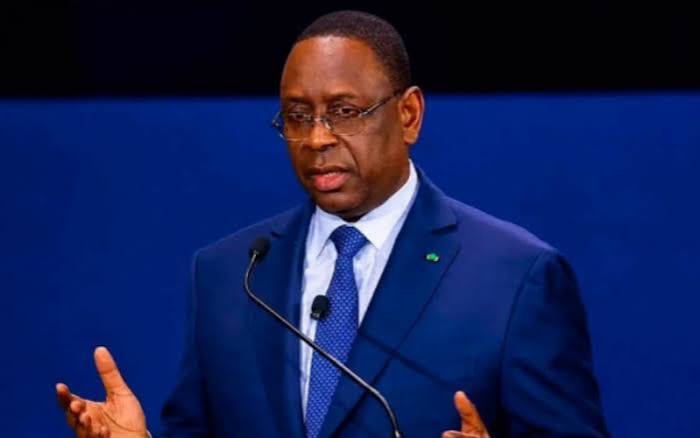
Former Senegalese President Macky Sall has withdrawn his candidacy to become the next United Nations secretary-general, citing indications that members of the UN Security Council favour a candidate from Latin America and the Caribbean, potentially a woman.
Sall announced his decision on Saturday, October 17, following an informal Security Council ballot held a day earlier and consultations with Burundi’s President Évariste Ndayishimiye, the African Union’s rotating chairperson, and Senegalese President Bassirou Diomaye Faye, who also chairs the Economic Community of West African States (ECOWAS).
In a statement, Sall said he hoped his withdrawal would help the council reach a consensus on a successor to António Guterres, whose second term ends on December 31, 2026.
He said the results of successive informal polls suggested a preference for a candidate from the Latin American and Caribbean region, possibly a woman. Sall added that his candidacy had been motivated by a desire to put nearly four decades of public service at the disposal of the United Nations.
Sall thanked Ndayishimiye, who sponsored his nomination, and Faye for supporting his bid. He also expressed gratitude to Security Council members who backed him, his campaign team and supporters across Senegal and the wider international community.
The withdrawal followed the sixth informal Security Council poll, in which all seven candidates reportedly received at least one discouraging vote from a permanent council member. Such a vote signals potential opposition from one of the five permanent members: China, France, Russia, the United Kingdom and the United States.
Costa Rica’s former vice president, Rebeca Grynspan, emerged as a leading contender in the latest ballot, although she also faced opposition. The informal polls are not binding, and the final selection process remains subject to further negotiations among council members.
The UN secretary-general is recommended by the Security Council and appointed by the General Assembly. The permanent members’ veto powers mean that a candidate must secure sufficient support while avoiding a veto from any of the five.
Sall’s candidacy had also encountered controversy over the process used to secure African Union backing. Nigeria and other countries questioned aspects of the endorsement procedure, raising concerns about whether the nomination had followed established continental processes.
Sall served as Senegal’s president from 2012 to 2024. His tenure included infrastructure and economic development initiatives, but also political tensions surrounding his attempt to postpone the 2024 presidential election, which Senegal’s Constitutional Council overturned. His successor, Faye, initially withheld public support before endorsing Sall’s candidacy in July.
Despite leaving the contest, Sall reiterated his commitment to peace, security, economic and social development, international cooperation and dialogue among nations.
He also called for significant reforms to the United Nations, arguing that the organisation must adapt its working methods to a global environment marked by armed conflicts, geopolitical rivalries and economic pressures.
Sall’s withdrawal narrows the field seeking to succeed Guterres and raises further questions about Africa’s prospects in the selection process. The next secretary-general will take office on January 1, 2027, and will face the task of leading a multilateral institution confronting international conflicts, funding pressures and disagreements among major powers.



Leave a comment