


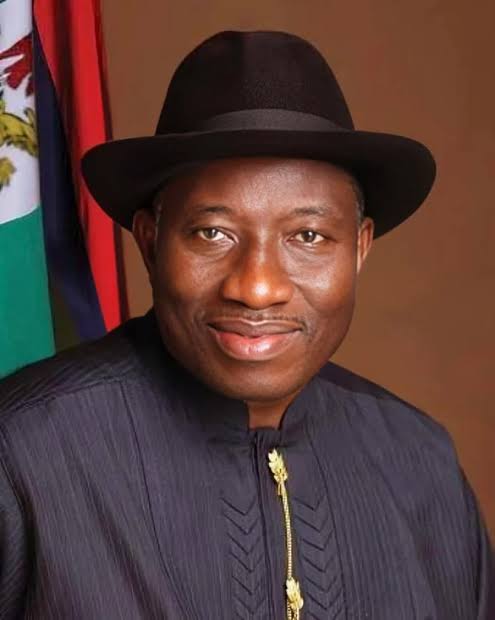
Former President Goodluck Jonathan has backed retired Inspector General of Police Mohammed Abubakar’s call for Nigeria to complement military operations against terrorism with education, job creation, intelligence gathering and community engagement.
Jonathan made the remarks on Saturday in Abuja during the public presentation of Abubakar’s book, Beyond the Bullets: Policing Terrorism in a Democratic System. He was represented at the event by his former Chief of Staff, Mike Oghiadomhe.
Jonathan said successive administrations since the beginning of Nigeria’s Fourth Republic had faced terrorism and other forms of violent insecurity, requiring sustained commitment, institutional learning and cooperation across governments.
He argued that counterterrorism efforts must go beyond the use of force to address the conditions that make young people vulnerable to recruitment by violent groups.
The former president cited his administration’s Almajiri education initiative, which sought to provide children in the traditional Islamic education system with additional schooling and practical skills. He said the programme was intended to improve their economic prospects and reduce their vulnerability to criminal recruitment.
Jonathan also urged the Federal Government to revisit the Great Green Wall initiative, which was designed to combat desertification while creating opportunities in agriculture, livestock production and rural employment. He said the programme had the potential to generate jobs for hundreds of thousands of people.
He maintained that addressing insecurity required a collective effort involving government institutions, communities and citizens, rather than relying solely on security agencies.
Abubakar, who served as inspector general of police from 2012 to 2014, said his book drew on more than three decades of policing experience and examined the challenges terrorism poses to democratic institutions, civil liberties and public confidence.
He argued that effective counterterrorism required coordinated security planning, credible intelligence, risk assessment, accountability and continuous institutional learning.
The retired police chief cautioned against treating entire communities as suspects because of the actions of individuals or armed groups. He said indiscriminate security measures and abuses of power could damage public trust and undermine efforts to isolate extremist organisations.
According to Abubakar, democratic institutions, including the courts, legislature, media and civil society, should be viewed as essential safeguards in the fight against terrorism rather than obstacles to security operations.
The book examines the relationship between security management, human rights, intelligence gathering and justice. It argues that investigations must be credible, evidence properly tested and victims heard, even when security threats demand urgent action.
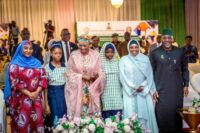
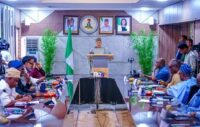
The event brought together political leaders, security officials, academics and other stakeholders to discuss Nigeria’s continuing security challenges. Those in attendance included the Inspector General of Police, Olatunji Disu; businessman Aliko Dangote; Zamfara State Governor Dauda Lawal; former Senate President Bukola Saraki; and former Anambra State Governor Peter Obi.
Nigeria continues to confront multiple security threats, including the Boko Haram and Islamic State West Africa Province insurgencies in the North East, armed banditry and kidnappings in the North West and parts of the North Central region, and other forms of organised violence.
The debate over non-kinetic approaches reflects growing recognition that military and police operations alone cannot resolve the social, economic and institutional challenges that sustain insecurity.
Education, employment, rehabilitation, community trust and effective justice systems can complement security operations, while intelligence-led enforcement remains necessary to protect communities and hold perpetrators accountable.
Jonathan’s endorsement adds to calls for a comprehensive counterterrorism strategy that combines operational capacity with preventive measures, social development and respect for democratic principles.







Leave a comment