


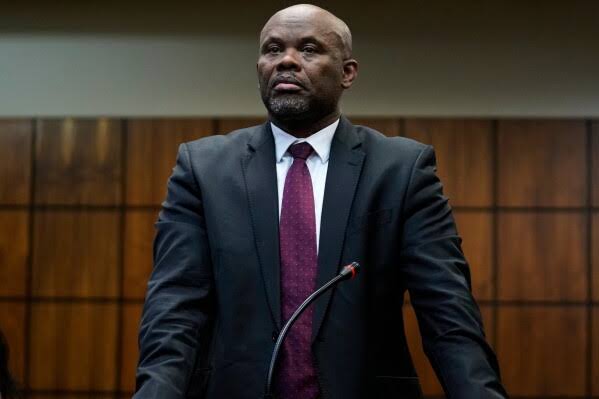
South Africa’s suspended deputy national police commissioner, Lieutenant General Shadrack Sibiya, has resigned from the South African Police Service (SAPS) amid corruption allegations, disciplinary proceedings and separate criminal charges involving alleged sexual offences.
Sibiya’s lawyer submitted his resignation on Monday, October 12, 2026, shortly after a disciplinary hearing against him began. Police confirmed that his employment ended with immediate effect. Because disciplinary proceedings were pending at the time of his departure, the service classified his exit as a dishonourable discharge.
The disciplinary hearing was examining allegations of misconduct linked to claims presented before the Madlanga Commission of Inquiry, which is investigating alleged corruption and criminal networks within South Africa’s police service and wider criminal justice system.
Among the allegations against Sibiya are claims that he received money and gifts from individuals suspected of criminal activity, mishandled confidential police information and interfered with investigations. He has denied allegations of wrongdoing raised during the commission’s proceedings.
Sibiya also faces a separate criminal case involving allegations of rape and the sexual grooming of a minor. He was arrested in September and remains in custody. His bail application was scheduled to continue on Tuesday, October 13. The allegations have not been established as facts in court, and the criminal proceedings remain separate from the disciplinary case.
The resignation ends Sibiya’s service as one of the country’s most senior police officers, following his suspension in September 2025. His departure comes amid broader scrutiny of alleged criminal influence within law enforcement.
The Madlanga Commission was established after KwaZulu-Natal police commissioner Nhlanhla Mkhwanazi made public allegations in 2025 that criminal syndicates had penetrated law enforcement and interfered with investigations. Those allegations prompted wider investigations into relationships between police officials, political figures and people suspected of criminal activity.
Sibiya’s policing career has also faced previous controversy. He was dismissed as head of the Hawks in Gauteng in 2015 over allegations connected to the unlawful rendition of Zimbabwean suspects. He challenged the dismissal, and subsequent labour court proceedings resulted in an order for his reinstatement. He later returned to national policing and became deputy national commissioner for crime detection.
His resignation does not amount to a judicial finding on the allegations against him. The criminal case and wider investigations will determine whether evidence supports further legal action.
The departure adds to leadership uncertainty within SAPS as authorities face mounting pressure to address allegations of corruption, strengthen accountability and restore public confidence in the country’s law enforcement institutions.




Leave a comment