


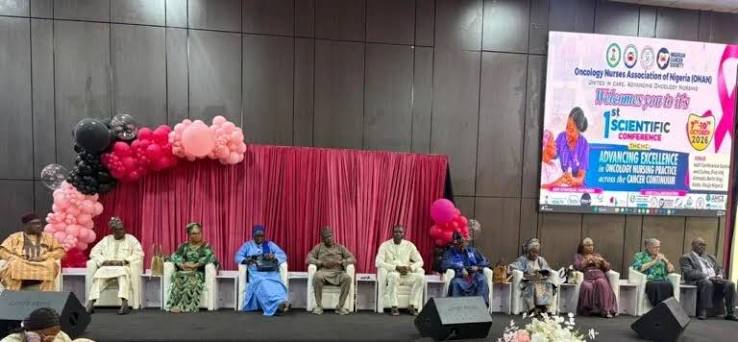
The Minister of State for Health and Social Welfare, Dr. Iziaq Salako, has called for greater participation of oncology nurses in health policy and cancer care, saying their expertise is critical to improving outcomes across the cancer care continuum.
Salako made the call on Wednesday in Abuja at the opening of the first National Scientific Conference of the Oncology Nurses Association of Nigeria, ONAN, themed, “Advancing Excellence in Oncology Nursing Practice Across the Cancer Care Continuum.”
Represented by Dr. Uchechukwu Nwokwu, National Coordinator of the National Cancer Control and Nuclear Medicine Programme, the minister said cancer was a complex disease requiring coordinated intervention by different health professionals.
He said nurses, who operate across primary, secondary and tertiary healthcare levels, had an important role in prevention, early detection, screening, diagnosis, treatment and follow up care.
“The policy space is for every one of us. It is not owned by the Minister of Health,” Salako said, urging nurses to become more actively involved in policy development and implementation.
The minister said oncology nurses were particularly important at the primary healthcare level, where they could contribute to early detection, screening and prompt diagnosis.
He also assured the nurses that the Federal Ministry of Health and Social Welfare was committed to strengthening their skills and ensuring that they occupied an appropriate position within the health system.
“We are open to ensuring that nurses get their rightful place in terms of skills, in terms of position. Also in terms of the relationship with other professionals within the health system,” he said.
Shortage of specialist oncology nurses
President of ONAN, Siraju Marafa, an oncology nurse at Usmanu Danfodiyo University Teaching Hospital, Sokoto, said oncology nurses remain closely involved with patients throughout the cancer journey, including during treatment, pain management, management of side effects, survivorship and palliative care.
Represented by the association’s Vice President, Joyce Asufi, Marafa said many oncology nurses had developed their skills in isolation, making professional conferences important for knowledge sharing, mentorship and strengthening clinical practice.
He identified specialist training, early detection, access to treatment and workplace safety as some of the major challenges confronting oncology nursing in Nigeria.
Marafa also called for better protection for nurses who prepare and administer cytotoxic drugs and work around radiation, saying inadequate protective equipment, safe handling systems and regular monitoring exposed workers to unnecessary risks.
He urged the government to provide more opportunities for oncology nurses to undertake specialist training within and outside Nigeria and introduce incentives that would encourage more nurses to specialise in cancer care.
The President of the Nigerian Cancer Society, Prof. Abidemi Omonisi, also raised concerns about the shortage of qualified oncology nurses in Nigerian hospitals.
Omonisi said some facilities rely on nurses who develop an interest in oncology or are temporarily assigned to cancer units, despite oncology nursing being an important component of multidisciplinary cancer care.
He encouraged nurses and nursing students to consider oncology as a specialised career and take advantage of available training and mentorship opportunities.
Strengthening cancer care workforce
The shortage of formally trained oncology nurses remains a structural challenge in Nigeria’s cancer care system. A previous Nigeria imPACT review found that oncology nursing was not recognised as a standalone specialty in accredited Nigerian tertiary institutions, leaving many nurses caring for cancer patients with limited formal oncology training.
The Federal Government has identified oncology workforce development as part of the Nigeria National Cancer Control Plan 2026 to 2030, alongside prevention, early detection, diagnosis, treatment, survivorship, research and patient navigation.
The government is also pursuing broader investments in cancer infrastructure and treatment capacity, including the development of cancer centres of excellence, procurement of 35 linear accelerators over three years and expansion of diagnostic services.
A cancer survivor who attended the conference, Yemisi Daodu, said encouragement from an oncology nurse helped her maintain confidence during treatment.
She urged Nigerians to seek medical attention when they notice concerning symptoms, stressing the importance of early detection and treatment.
The conference brought together oncology nurses, cancer specialists, policymakers, survivors and other stakeholders to examine ways of strengthening cancer care in Nigeria. The discussions highlight the importance of investing not only in cancer treatment infrastructure but also in the specialised workforce required to deliver comprehensive and patient centred care.








Leave a comment