


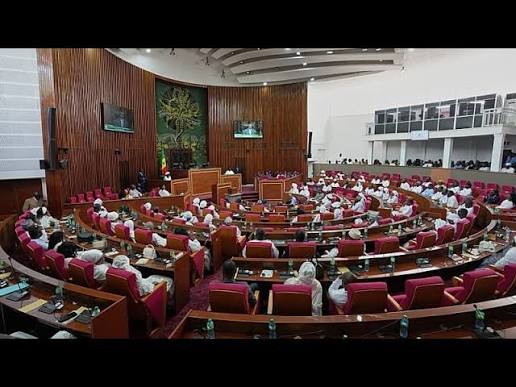
Senegal’s opposition is urging President Bassirou Diomaye Faye to set a date for municipal and departmental elections, turning the vote into a potential early political test following the growing rift between Faye and his former ally, Ousmane Sonko.
The five-year mandates of Senegal’s current local authorities are due to expire in January 2027, but President Faye has yet to issue the decrees required to begin the electoral process, including setting the election date and opening voter registration.
Opposition groups, including the FDR coalition led by forces associated with former President Macky Sall, have rejected any proposal to postpone the elections or extend the mandates of existing local officials.
Sonko, who previously served as prime minister under Faye, has also repeatedly called for the elections to be held on schedule. The two men, who rose to power together in 2024, have since experienced a major political split, with Faye dismissing Sonko as prime minister in May. Sonko later returned to parliament as its speaker.
The dispute has added uncertainty to Senegal’s political landscape and could make the local elections the first significant electoral contest between the former allies. Many local councils remain controlled by political forces linked to Macky Sall, creating the possibility of a major struggle for influence at the grassroots level.
Under Senegal’s electoral code, the decree setting the election date must reportedly be published at least 80 days before voting. This means that if the elections are to take place before the current local mandates expire, the necessary decree would need to be issued by early November.
Faye’s decision to establish his own political party, Kiiraay, in July has further deepened the political divide. The move formally marked a break with Pastef, the movement that brought Faye and Sonko to power.
Political analysts say the president faces a difficult calculation over when to hold the vote, particularly as he seeks to consolidate his authority and build support for his new political movement. The outcome could also provide an early indication of the balance of power ahead of Senegal’s 2029 presidential election.
The opposition maintains that setting the election date promptly is necessary to preserve the credibility of Senegal’s democratic institutions and prevent uncertainty over local governance.
With the January deadline approaching, pressure is expected to intensify on President Faye to clarify the electoral timetable and determine whether Senegal’s local elections will proceed as scheduled.







Leave a comment