


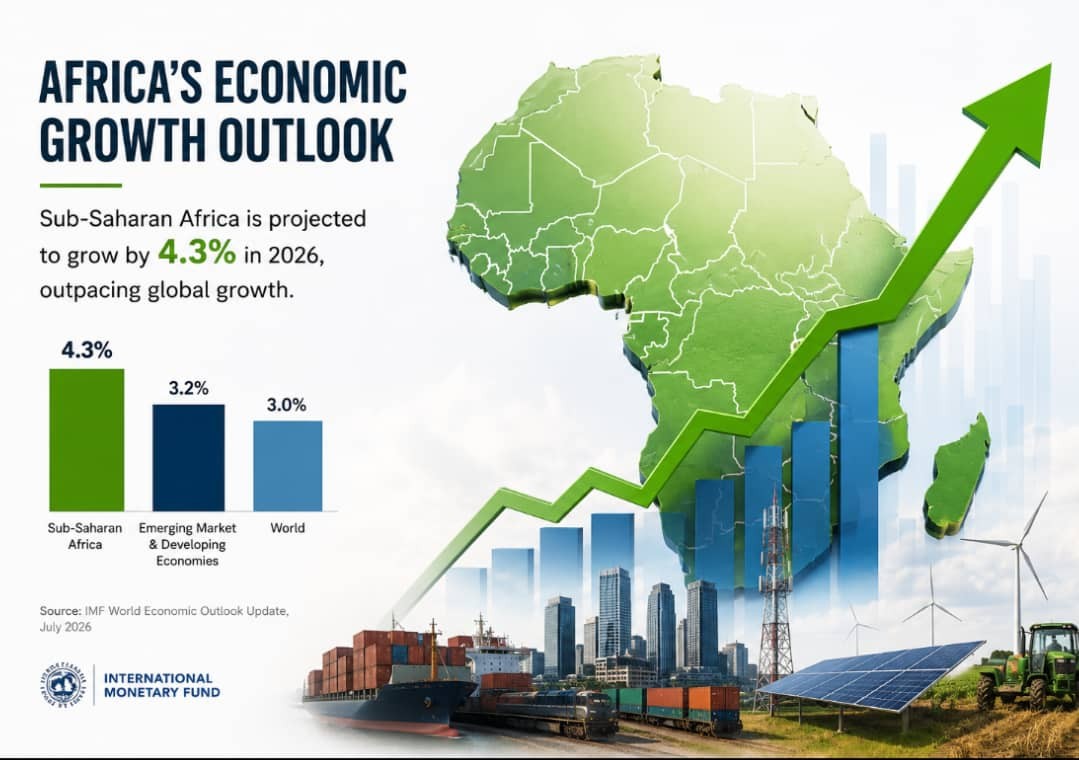
According to the Fund, several countries across Sub-Saharan Africa are benefiting from reforms aimed at stabilizing public finances, strengthening monetary policy, and improving the business environment. These measures, combined with rising investments in infrastructure, agriculture, technology, manufacturing, and renewable energy, are helping to support sustainable economic expansion.
The positive outlook also reflects the growing contribution of Africa’s youthful population and expanding consumer markets. With one of the fastest-growing populations globally, the continent continues to attract investors seeking opportunities in telecommunications, financial services, digital technology, healthcare, logistics, and consumer goods.
Economists note that domestic consumption remains a major driver of growth across many African economies. As urbanization accelerates and the middle class expands, demand for financial services, housing, transportation, retail products, and digital solutions continues to increase. This trend is encouraging both local and international businesses to expand operations across the continent.
The IMF further highlighted that the implementation of structural reforms in several countries has helped improve investor confidence despite external economic shocks. Fiscal discipline, improved tax administration, financial sector reforms, and efforts to diversify economies beyond commodity exports are strengthening economic resilience in many parts of the region.
The African Continental Free Trade Area (AfCFTA) is also expected to play an increasingly important role in supporting long-term growth. By reducing trade barriers and promoting regional integration, the agreement is creating opportunities for businesses to access larger markets, improve supply chains, and increase intra-African trade. Analysts believe that successful implementation of AfCFTA could significantly enhance industrialization and boost economic competitiveness across the continent.
Technology continues to emerge as another major growth driver. Digital payment systems, mobile banking, e-commerce platforms, artificial intelligence, and financial technology innovations are transforming business operations and expanding financial inclusion. These developments are creating new opportunities for entrepreneurs while improving productivity across multiple sectors.
Despite the encouraging outlook, the IMF cautioned that important risks remain. High public debt levels, climate-related shocks, fluctuating commodity prices, global trade uncertainties, and exchange rate volatility could affect economic performance in some countries. The Fund emphasized the need for governments to continue implementing sound fiscal and monetary policies while strengthening institutions and improving governance.
Climate change also remains a significant concern. Many African economies continue to depend heavily on agriculture, making them vulnerable to droughts, floods, and other extreme weather events. Increased investment in climate resilience, sustainable agriculture, renewable energy, and disaster preparedness will be essential to protecting future economic growth.
Development experts believe that greater investment in education, healthcare, digital infrastructure, and skills development will further strengthen Africa’s long-term economic prospects. Expanding access to quality education and modern technology will enable the continent’s growing workforce to participate more effectively in the global digital economy.
For businesses and investors, the IMF’s forecast sends a positive signal that Africa remains one of the world’s most promising growth frontiers. Rising consumer demand, expanding infrastructure, digital innovation, and regional economic integration continue to create opportunities across sectors ranging from manufacturing and agriculture to finance and renewable energy.
While global economic uncertainty is expected to persist throughout 2026, the IMF believes Sub-Saharan Africa is well positioned to maintain growth momentum if governments sustain reform efforts, promote private sector investment, strengthen regional cooperation, and continue improving the overall business environment. The latest outlook reinforces the continent’s growing role in the global economy and highlights its potential to become an increasingly important destination for trade, investment, and innovation.









Leave a comment