


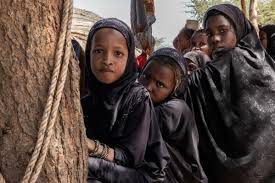
The Associated Press has gained rare access to a refugee camp in neighbouring Mauritania where Malians fleeing violence have made grave allegations against Africa Corps, a new Russian controlled military unit operating in Mali. According to refugees and aid workers, the group has been implicated in serious human rights abuses, including rape, beheadings and the killing of civilians, marking the first time such accusations against Africa Corps have been reported publicly.
Africa Corps replaced the Russian mercenary group Wagner earlier this year. Wagner had for years supported the military governments of Mali, Burkina Faso and Niger in their fight against armed groups linked to al Qaeda and the Islamic State. The Sahel region has since become the deadliest place in the world for extremist violence, with civilians increasingly trapped between militants, national armies and foreign forces.
In interviews with the Associated Press, 34 refugees in and around the camp described horrifying experiences as they fled northern Mali. Several alleged that Africa Corps fighters attacked their villages, committing acts of sexual violence and carrying out executions. Among the most disturbing cases was that of a 14 year old girl who lay critically ill in a makeshift clinic when journalists visited.
Bethsabee Djoman Elidje, the clinic’s women’s health manager, said the girl was suffering from a severe infection linked to sexual assault and had been in untreated shock for days. Medical staff believed they were seeing her at the last possible moment to save her life. Family members told aid workers that the girl had been raped by Russian fighters during an attack on their village, during which her uncle was allegedly beheaded.
Her relatives said fear gripped the entire community after the attack. One aunt recalled believing they would all be killed next. Like many refugees interviewed, the family asked to remain anonymous or used only first names, citing fear of retaliation.
These accounts are part of a broader displacement crisis. More than 3,300 people have crossed into Mauritania in the past month alone as violence intensifies in northern Mali. The exodus has been worsened by a fuel blockade imposed by al Qaeda linked JNIM fighters, further strangling already fragile communities.
Legal experts say the allegations carry serious implications because Africa Corps is described as a formal Russian military unit. Unlike Wagner, whose relationship with the Kremlin was often denied or obscured, Africa Corps’ structure could make Russian authorities directly responsible for the actions of its fighters under international law.
Malian authorities have consistently avoided publicly acknowledging the presence of either Wagner or Africa Corps on their territory. However, Russian state media has recently broadcast reports from Mali praising Africa Corps for defending the country against what it calls terrorists. The Russian Ministry of Defense did not respond to requests for comment on the Associated Press’ findings.
Beyond the case of the teenage girl, the AP documented at least four additional allegations of sexual violence, including accounts of attempted rape by Africa Corps fighters. Aid workers and United Nations officials say such abuses are often under reported due to fear, stigma, lack of medical access and the shame surrounding sexual assault.
Elidje said many survivors only seek help when their condition has become life threatening. She believes the cases reaching clinics represent only a fraction of the true scale of the abuse.
The United Nations has long accused all parties in Mali’s conflict of committing violations, including Mali’s army, Islamist armed groups and Wagner forces. Sexual violence, massacres and forced disappearances have been documented over more than a decade of fighting. As the conflict has intensified, thousands have been killed and millions displaced across the Sahel.
Ukru Cansizoglu, the UN refugee agency’s representative in Mauritania, said families are being torn apart by rape, killings and constant fear. However, he acknowledged that identifying perpetrators is often extremely difficult, especially in remote areas where access for journalists and humanitarian workers is severely restricted.
Some refugees showed journalists videos they said depicted villages burned by Africa Corps fighters. Others described finding the bodies of relatives mutilated, with organs removed. A Malian village chief who fled for the second time said armed men killed anyone they encountered without speaking to them.
With access to northern Mali increasingly closed off, experts warn that the true scale of the violence may never be fully known. What is clear, however, is that civilians continue to pay the heaviest price in a war marked by secrecy, impunity and escalating brutality.











Leave a comment