


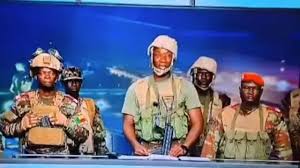
About two hundred West African soldiers, primarily from Nigeria and Ivory Coast, have been deployed to Benin to reinforce national security in the aftermath of Sunday’s failed coup attempt. Benin’s Minister of Foreign Affairs, Olushegun Adjadi Bakari, disclosed the figure on Thursday, marking the first official confirmation of the scale of regional military support mobilised to safeguard the country’s democratic institutions.
The coup plotters, a group of rebel soldiers, had attempted to seize a military base and the state television headquarters, where they brazenly announced a takeover. The mutiny was swiftly quashed after Nigeria deployed fighter jets to neutralise the rebels’ positions and force them into retreat, a move described by Nigeria as a direct defence of democracy in the region.
Bakari explained that several foreign troops remain in Benin as part of an ongoing sweep and clean up operation designed to prevent any resurgence of the attempted insurrection. The precise number of personnel still on the ground has not been confirmed, but he noted that the regional deployment, backed by the Economic Community of West African States, includes troops from Nigeria, Ghana, Sierra Leone and Ivory Coast.
An Ivorian security source earlier indicated that fifty soldiers from Ivory Coast were part of the deployment, contributing to what Bakari characterised as a crucial stabilisation effort. He highlighted that by the time Benin requested military assistance under Ecowas protocols, the coup attempt was already faltering, with national forces having pushed the mutineers from key sites.
What was needed, according to him, was precise aerial support to execute a surgical operation targeting rebel strongholds without endangering civilians. The regional military response, coupled with rapid diplomatic and intelligence coordination between Nigeria and Benin, is being credited with bringing the situation under control within hours.
A manhunt for the perpetrators continues, and authorities believe the alleged leader of the failed coup has fled into neighbouring Togo. Discussions are ongoing regarding how long regional forces should remain in Benin, with Bakari stressing that any decision will be made jointly with the country’s defence and security institutions, which he praised for their bravery.
The incident has heightened regional concerns about the domino effect of coups across West Africa. With successful military takeovers in Mali, Burkina Faso, Niger and Guinea in recent years, Ecowas is under mounting pressure to enforce its democratic norms more decisively. Bakari described the bloc as an essential platform for defending democratic values and stabilising member states.
Benin has faced increasing security threats along its northern border, where jihadist groups linked to Islamic State and al Qaeda have expanded southward from the Sahel. These incursions have resulted in casualties among Benin’s armed forces and raised fears about broader regional destabilisation.
President Patrice Talon, a close ally of Western governments, is expected to leave office next year after completing his second term, with national elections planned for April. The failed coup has injected additional urgency into regional security cooperation and highlighted the fragility of democratic systems in a region grappling with expanding insurgency and political volatility.
For Benin, the current deployment is both a signal of solidarity from its neighbours and a reminder of the precarious security landscape it must navigate as the country prepares for a critical election year.








Leave a comment