


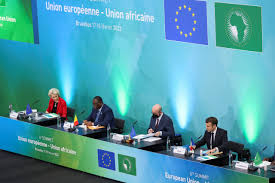
The European Union is moving to recalibrate its relationship with Africa as global political dynamics continue to shift, weakening the EU’s influence and reshaping longstanding partnerships. According to David Monyae, Director of the Centre for Africa–China Studies at the University of Johannesburg, the EU is increasingly aware that its traditional leverage on the continent has diminished, prompting a renewed push for engagement.
Monyae explains that the geopolitical landscape has evolved dramatically over the past decade. Emerging powers like China, India, Türkiye, and the Gulf states have deepened their economic and political ties with African countries, offering alternative sources of investment, infrastructure financing, and diplomatic support. As a result, African nations now have more options — and greater bargaining power — in choosing their global partners.
“The EU no longer enjoys the dominance it once had as a collective bloc,” Monyae notes. “Africa is engaging with a wider range of players who offer competitive terms, respect sovereignty differently, and operate with different strategic motivations. This has forced Europe to rethink how it positions itself.”
The EU’s renewed interest is reflected in recent high-level dialogues, development pledges, migration agreements, and energy partnerships. Europe’s need for critical minerals, renewable energy, and diversified supply chains — particularly in the wake of global disruptions and the Russia–Ukraine war — has intensified its focus on Africa’s strategic importance.
At the same time, African leaders are pushing for relationships that are more equitable, mutually beneficial, and free from historical power imbalances. Analysts say the continent’s youthful population, growing markets, and geopolitical relevance make it a central player in the emerging global order.
Monyae argues that any meaningful reset must be rooted in genuine partnership, not paternalism. “Africa wants investment, technology transfer, and fair trade, not prescriptive policies or one-sided agreements,” he says. “If the EU is serious about rebuilding trust, it will need to engage Africa on equal terms.”
As the world transitions into a new era marked by multipolar power centres, Europe’s approach to Africa could determine whether it remains a relevant actor on the continent — or continues to lose ground to rivals offering more appealing alternatives.








Leave a comment