


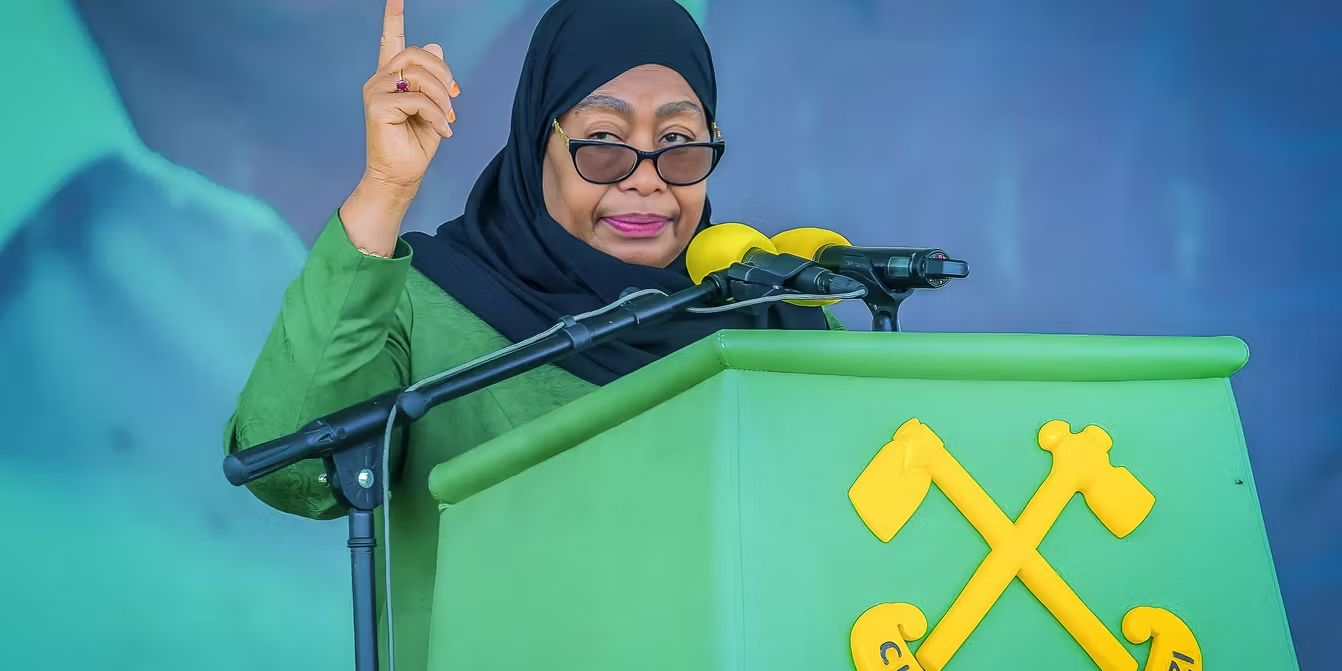
Tanzania is reeling from the aftermath of its most violent post-election unrest in decades, challenging the country’s long-standing reputation as a model of peace and stability in Africa. President Samia Suluhu Hassan, who won the recent election with 98% of the vote, acknowledged deaths during the protests in a defiant inauguration speech while blaming foreign actors for the violence.
The exact death toll remains unclear as families continue to search for or bury relatives affected by the unrest. Once celebrated for her calm and conciliatory leadership, President Samia’s image has been sharply tarnished by the recent crisis. Analysts describe the protests, largely led by young people, as a culmination of years of political frustration, stalled reforms, and growing dissatisfaction with the ruling Chama Cha Mapinduzi (CCM) party.
Critics argue that the political climate leading up to the elections was tense, with credible opposition candidates systematically blocked from contesting. Prominent figures like Tundu Lissu were detained on charges he denies, while Luhaga Mpina’s candidacy was rejected on technical grounds. These moves, according to governance experts, undermined Tanzania’s democratic traditions and eroded public trust.
The protests drew comparisons to global youth-led movements against entrenched leadership, highlighting generational anger over political stagnation and repression. Satirists and journalists have pointed to the CCM’s failure to address long-standing grievances, describing the government as disconnected and tone-deaf to citizens’ demands for accountability and reform.
President Samia’s leadership, initially admired for its conciliatory and reformist approach, has now come under scrutiny for alleged centralization of power and suppression of dissent. Her “4R” doctrine—reconciliation, resilience, rebuilding, and reform—has been overshadowed by arrests, abductions, and violent crackdowns in the run-up to the election.
The political unrest has prompted rare criticism from regional and continental bodies, including the African Union and the Southern African Development Community, who cited electoral irregularities, repression, and systemic flaws. The main opposition, the Party for Democracy and Development (Chadema), has dismissed the election results as “completely fabricated.”
Analysts warn that Tanzania’s post-election violence has shattered the country’s image of stability, with international scrutiny mounting and questions arising about the legitimacy of Samia’s second term. As the nation struggles to reconcile with the crisis, the events signal a new, uncertain chapter in Tanzania’s political history, challenging both domestic governance and the country’s standing on the African continent.









Leave a comment