


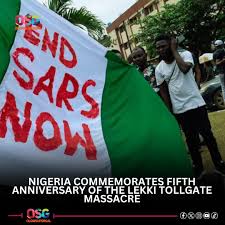
Five years after the tragic Lekki Tollgate shooting that shook Nigeria and captured global attention, survivors and families of victims continue to battle pain, trauma, and a deep sense of injustice. What began as a peaceful call to end police brutality through the #EndSARS protests has left behind scars that remain unhealed, with many Nigerians saying justice has yet to be served.
On the night of October 20, 2020, hundreds of protesters waving green and white flags and singing the national anthem at the Lekki Tollgate in Lagos were suddenly engulfed in chaos as gunfire erupted. Among them was Agbeze Ifeanyi Matthew, a 35-year-old content creator who recalls the night as one of terror and disbelief.
“I thought I was going to die,” he said, describing how a bullet pierced his chest and exited through his back. “There were two openings. I could hear the doctors and nurses talking, but I couldn’t react or open my eyes.”
Matthew was one of the few lucky ones who survived. That night, at least 48 people were wounded and a dozen others killed when soldiers opened fire on unarmed demonstrators. The government initially denied responsibility, calling reports of the shooting “fake news,” but eyewitnesses and human rights organizations documented overwhelming evidence of military involvement.
The #EndSARS movement, which began as a peaceful protest against the Special Anti-Robbery Squad (SARS) — a notorious police unit accused of extortion, harassment, torture, and killings — quickly became a nationwide demand for justice, accountability, and better governance.
Matthew said he joined the protests because SARS officers had routinely profiled him because of his dreadlocks and dyed hair. “They once told me they could shoot me and nothing would happen,” he said. Like thousands of young Nigerians, he saw #EndSARS as a chance to stand up against years of systemic abuse.
But the hope that the protests would lead to lasting change soon faded. Despite state governments setting up judicial panels of inquiry to investigate police brutality and compensate victims, many survivors say justice remains elusive. The Lagos State Judicial Panel recommended that victims of the Lekki shooting be compensated and that implicated officers be prosecuted, yet few of those recommendations have been implemented.
According to Human Rights Watch researcher Anietie Ewang, the aftermath of the protests reveals Nigeria’s broader failure to ensure accountability. “The country moves on too quickly from events like the #EndSARS protests. It’s reflective of the impunity within which the security forces operate and the failure of the justice system,” she said.
Matthew continues to live in pain. The bullet fractured two ribs that now collide painfully, requiring surgery he cannot afford. He says he still struggles with both physical pain and emotional trauma. “I’m alive, but the pain is a daily reminder that nothing has changed,” he said.
In Ogbomoso, Oyo State, Jimoh Atanda mourns his son Jimoh Isiaka, the first protester killed in the 2020 demonstrations. The 21-year-old was shot dead while peacefully protesting, and five years later, his family says the police officers responsible are still free. “No one should experience the loss of their child,” Atanda said, his voice heavy with grief. “We were promised justice, but nothing has been done.”
His wife’s health has deteriorated since their son’s death. “Every October, her pain gets worse,” he added quietly.
While Lagos State claims to have paid over 410 million naira in compensation to 70 victims and families, survivors argue that no amount of money can replace lost lives or restore faith in a system that has repeatedly failed them.
The federal government, for its part, has distanced itself from responsibility, saying that state governments were solely in charge of the investigations and compensation processes. But activists say the silence from Abuja and the lack of accountability for those who ordered the shootings reflect a culture of denial and impunity.
Five years on, October 20 remains a day of mourning and reflection for many Nigerians. It is also a stark reminder of the price young people paid for demanding a better country and the struggle that continues for truth and justice.
As the anniversary approaches, Matthew says his dream is simple: that those responsible for the violence at Lekki Tollgate are finally held accountable. “We didn’t deserve to be shot for asking for a better Nigeria,” he said. “Until justice is done, the wounds of #EndSARS will never heal.”




Leave a comment