


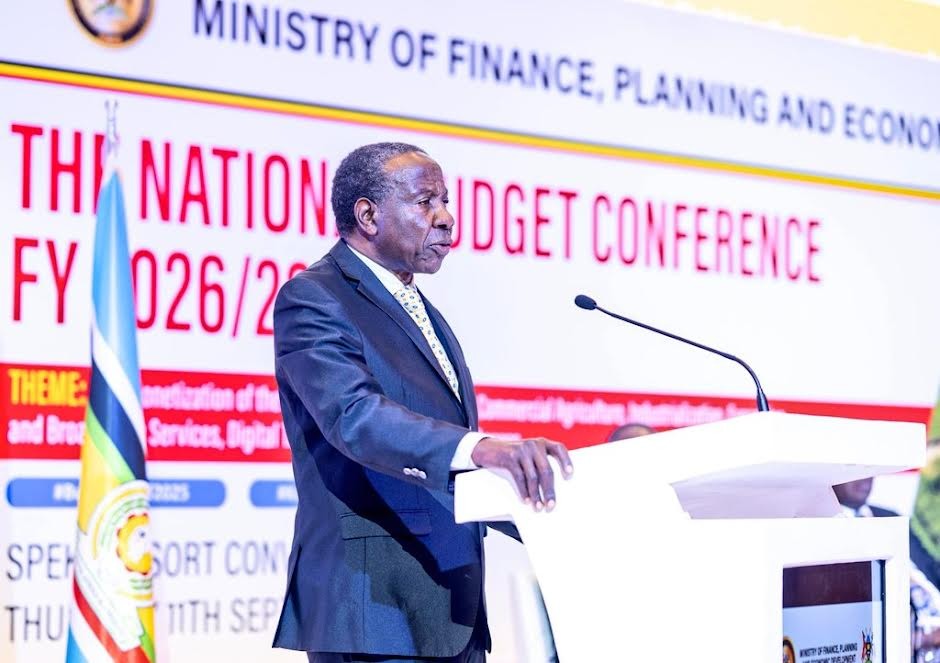
Uganda’s public debt has soared to unprecedented levels, rising by 26.2% in the 2024/2025 financial year as the government turned heavily to domestic borrowing to finance its growing expenditure needs. According to an annual public debt report released on Friday by the Ministry of Finance, the country’s total public debt climbed from $25.6 billion in June 2024 to $32.3 billion by June 2025, underscoring the mounting fiscal pressures facing East Africa’s third-largest economy.
The report highlights that Uganda’s borrowing needs have intensified due to rising infrastructure commitments, social sector demands, and the cost of managing debt repayments amid global economic uncertainty. A significant share of the new debt was sourced domestically, with government securities issued through the Bank of Uganda playing a central role in plugging budget shortfalls. Officials say the shift toward domestic borrowing reflects tighter access to concessional external loans and the growing urgency to meet immediate financing obligations.
Economists warn that the steep increase in debt raises sustainability concerns, especially as the government continues to allocate a large portion of its revenue to interest payments. This reduces fiscal space for investment in critical sectors such as healthcare, education, and agriculture, which are essential for inclusive economic growth. Already, Uganda spends a substantial percentage of its budget servicing debt, leaving less room for development projects that directly impact citizens’ livelihoods.
Analysts further caution that if borrowing trends persist, Uganda risks edging closer to debt distress, a situation that could undermine investor confidence and weaken the country’s credit rating. Regional observers note that Uganda is not alone in this challenge; several African economies, including Kenya and Ghana, have also struggled with ballooning public debt due to heavy borrowing, currency depreciation, and revenue collection shortfalls.
Government officials, however, maintain that much of the borrowed funds are being channeled into productive infrastructure investments such as roads, energy, and oil sector projects that will eventually boost economic growth and revenue generation. They argue that Uganda’s debt-to-GDP ratio remains within manageable levels compared to global thresholds, although they acknowledge that close monitoring is essential.
With the debt stock now exceeding $32 billion, public debate in Uganda has intensified over the long-term impact on economic stability. Civil society organizations and opposition figures have urged the government to exercise greater fiscal discipline, cut wasteful spending, and improve domestic revenue mobilization through stronger tax reforms. They warn that without a clear strategy, the country may face mounting repayment pressures that could crowd out essential public services and increase economic vulnerability.
As Uganda continues to position itself as a future oil producer and a hub for regional trade, the balance between borrowing for development and ensuring fiscal sustainability remains critical. The latest debt figures serve as a wake-up call for policymakers to adopt prudent financial management strategies that safeguard the economy while meeting the nation’s pressing development needs.












Leave a comment