


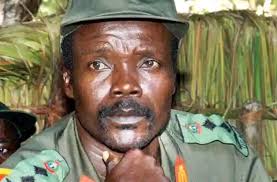
The International Criminal Court (ICC) in The Hague has opened a historic hearing against Joseph Kony, the elusive leader of the Lord’s Resistance Army (LRA), nearly two decades after his reign of terror gained worldwide notoriety for widespread atrocities across northern Uganda. This unprecedented “confirmation of charges” hearing marks the first time the ICC is holding proceedings in absentia, setting a global precedent for cases where high-profile suspects remain fugitives.
Kony, born in 1961 in the village of Odek in northern Uganda, first emerged as a Catholic altar boy before later declaring himself a spiritual medium. He used rituals, violence, and fear to control followers while launching a brutal campaign against the Ugandan government beginning in the 1980s. By the early 2000s, Kony’s LRA was responsible for mass killings, torture, and systematic abductions of children, many of whom were forced to become child soldiers or sex slaves. Between 2002 and 2005, the height of his insurgency, the ICC alleges that Kony oversaw widespread acts of rape, mutilation, and abduction, leaving a trail of devastation across villages and schools. In 2005, the ICC issued an arrest warrant charging him with 39 counts of war crimes and crimes against humanity.
Despite the charges, Kony has managed to evade capture for nearly two decades, continuing to destabilize parts of Central Africa. At its peak, the LRA operated not only in Uganda but also in the Democratic Republic of the Congo, the Central African Republic, and South Sudan. According to the United Nations, the group’s activities are believed to have killed over 100,000 people and displaced 2.5 million, with thousands of children kidnapped and indoctrinated into the militia. Survivors continue to recount the horrors of the conflict, such as Everlyn Ayo, who as a child endured unimaginable violence. She recalls rebels raiding her school, murdering and mutilating teachers, and forcing children to witness and participate in acts that left lifelong trauma.
The ICC’s current hearing is expected to last three days, giving prosecutors an opportunity to present evidence and arguments before judges decide whether the charges against Kony should be confirmed. Although the trial itself cannot move forward unless Kony is physically in ICC custody, experts note the significance of this moment. Michael Scharf, an international law professor at Case Western Reserve University, emphasized that “everything that happens at the ICC is precedent for the next case,” highlighting the broader implications for global justice, especially in situations where arresting a suspect is not immediately possible.
Kony’s notoriety reached international audiences in 2012 with the viral #Kony2012 social media campaign, which brought attention to the atrocities of the LRA. However, despite the global outcry, he continued to evade capture and remains at large. His name now joins a growing list of powerful figures the ICC has pursued, including Israeli Prime Minister Benjamin Netanyahu and Russian President Vladimir Putin, underscoring the challenges the court faces in pursuing justice when suspects wield power or remain beyond the reach of law enforcement.
The case also unfolds against the backdrop of geopolitical tension surrounding the ICC. Washington has historically opposed the court’s jurisdiction, and the Trump administration even imposed sanctions in response to the ICC’s investigations into alleged war crimes in Gaza, which led to arrest warrants for Netanyahu and former Israeli Defense Minister Yoav Gallant. Critics argue that the ICC faces a difficult balancing act between pursuing justice and navigating political pressures.
For survivors in Uganda and across the region, however, the focus remains firmly on accountability. Many, like Ayo, see the proceedings as an important step toward recognition of the suffering endured by victims, even if Kony is not yet captured. The hearing also serves as a stark reminder of the scars left by the LRA’s insurgency, as communities continue to rebuild after decades of violence.
As the hearing continues, the international community is watching closely. While the ICC’s decision will not bring Joseph Kony into custody, it represents a symbolic yet powerful move in the pursuit of justice. For millions affected by the LRA’s brutality, the proceedings signal that the world has not forgotten their pain, and that even fugitives who evade arrest cannot escape accountability forever.










Leave a comment