


The Federal Ministry of Health and Social Welfare has moved to reassure Nigerians that there is currently no confirmed case of Ebola Virus Disease in the country, while simultaneously making clear that it is treating the threat from the ongoing outbreak in East and Central Africa with the full seriousness it deserves. Heightened national preparedness measures have been activated, border health protocols have been tightened, and surveillance systems across the country have been placed on elevated alert.
The strain at the centre of current concern is the Bundibugyo ebolavirus, a variant of the Ebola family that has been circulating in parts of the East and Central African region and which Nigerian health authorities are monitoring closely. Nigeria shares none of its borders directly with the countries most affected, but in an era of high air travel and regional movement, geographic distance provides limited comfort, and the Ministry has been explicit that prevention depends on readiness rather than proximity.
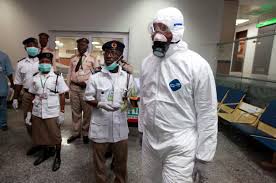
At the country’s ports of entry, the measures now in place represent a comprehensive first line of defence. Every arriving traveller is subject to temperature screening using infrared thermal scanners and handheld thermometers. All inbound passengers are completing mandatory health declaration forms and travel history assessments. Enhanced risk assessment procedures are in place at designated entry points, and anyone presenting with symptoms consistent with viral haemorrhagic fevers will be subject to secondary screening, isolation, and referral under established protocols. The Ministry has also strengthened coordination with immigration, aviation, maritime, and border management authorities to ensure that health screening is not an isolated exercise but part of an integrated, multi-agency response at the frontier.
Inside the country, the surveillance architecture has been reinforced at multiple levels. Integrated Disease Surveillance and Response activities have been intensified nationwide. Community-based and event-based surveillance systems have been strengthened to catch unusual illness patterns before they escalate. Public health alerts and rumours are being actively monitored, verified, and investigated. Epidemiological monitoring is continuous, and coordination with regional and international public health partners is ongoing. Nigeria’s experience with successfully containing previous outbreaks, including the 2014 Ebola outbreak that could have been catastrophic, has left the country with institutional knowledge and infrastructure that many of its neighbours lack. The current posture is built on that foundation.
Laboratory readiness is equally central to the preparedness picture. Specimen collection and transportation systems for viral haemorrhagic diseases are operational. Biosafety and biosecurity protocols are in place. Public Health Emergency Operations Centres have been activated. Rapid Response Teams at national and state level are on deployment readiness. And infection prevention and control measures at health facilities across the country are being reinforced, with healthcare workers, surveillance officers, and frontline personnel receiving ongoing sensitisation and preparedness training. The logic is straightforward: if a case does arrive, the system needs to identify it immediately, contain it rapidly, and respond before transmission can occur.
Healthcare facilities nationwide have received a specific advisory to maintain a high index of suspicion for viral haemorrhagic fevers, meaning that clinicians are being asked to think actively about the possibility when they encounter patients presenting with relevant symptoms rather than defaulting to more common diagnoses. Triage systems are to be strengthened, suspected cases are to be isolated promptly, and reporting protocols are to be followed without delay. In outbreak response, the speed of detection is often the single most important variable, and that speed depends entirely on clinicians at the point of first contact making the right call.
For ordinary Nigerians, the Ministry’s public guidance is practical and straightforward. Maintain regular hand hygiene. Avoid direct contact with the bodily fluids of anyone showing symptoms of illness. Stay away from dead animals or bushmeat from unknown sources. And report any unusual illnesses or deaths to the nearest health facility or authority without hesitation. The Ministry has also urged the public to rely only on official updates from recognised health authorities and to resist the spread of misinformation, which in past outbreaks has proven nearly as dangerous as the virus itself by driving communities away from the very health systems designed to protect them.
Nigeria’s history with Ebola is both a warning and a source of hard-won confidence. In 2014, when the virus arrived in Lagos carried by a single traveller from Liberia, swift action by health authorities contained what could have become a catastrophic urban outbreak in one of the world’s most densely populated cities. That response became a global case study in effective outbreak management. The current preparedness posture draws on that experience and on the institutional muscle built in the years since. Nigeria is not panicking. It is preparing. And in public health, those two things are very different.








Leave a comment