


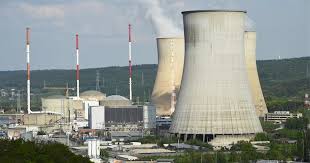
Russia has raised the possibility of building a nuclear power plant in uranium-rich Niger, a vast Sahelian state that relies heavily on coal-fired energy and imports of electricity from Nigeria. Although the idea may be years away from becoming reality, it underscores Moscow’s growing strategy of deepening ties with African nations while displacing Western influence.
For decades, Niger’s uranium has been mined largely for export to France, supplying the nuclear sector that underpins Paris’s energy security. French state-owned company Orano (formerly Areva) controlled the operations until June 2024, when Niger’s military-led government nationalised its assets, citing sovereignty and exploitation concerns. The move left France sidelined and created an opening for Russia’s state-owned Rosatom, which quickly signed a cooperation agreement with Niamey to explore opportunities not only in power generation but also in medical applications and local workforce training.
Russian Energy Minister Sergei Tsivilev, visiting Niger’s capital in late July, made it clear that Moscow’s ambitions extend beyond mining. “Our task is not simply to participate in uranium mining. We must create an entire system for the development of peaceful atomic energy in Niger,” he declared. If implemented, this would represent West Africa’s first nuclear power project, a symbolic leap for a country that has long exported uranium without reaping the technological benefits.
The geopolitical stakes are enormous. Russia is eyeing the chance to develop the Imouraren deposit, one of the world’s largest untapped uranium reserves, after Niger’s junta revoked Orano’s rights to the site in 2023. Securing control over Imouraren would cement Russia’s role in the global uranium supply chain at a time when nuclear energy is being revived as a tool to combat climate change. In addition, Niger has up to 1,400 tonnes of “yellowcake” uranium concentrate stockpiled from Orano’s Arlit mine, seized by the state earlier this year. Moscow could purchase these reserves at favourable prices, further strengthening its foothold in the market.
Niger’s pivot away from France and toward Russia is also fueled by deep political grievances. Relations with Paris collapsed after the July 2023 coup that toppled President Mohamed Bazoum, with France’s military and diplomatic presence subsequently expelled. Ecowas sanctions initially restricted Niger’s uranium exports, but even after restrictions were lifted, the junta barred Orano from resuming shipments. Attempts to court alternative buyers, including China and even Iran, have highlighted Niger’s determination to diversify partnerships while defying Western pressure.
Still, the dream of a Nigerien nuclear plant faces immense hurdles. Building such infrastructure requires billions of dollars in investment, stable electricity grids, a skilled domestic workforce, and, critically, a secure environment. Niger sits in a volatile region where jihadist groups operate across its borders with Mali and Burkina Faso, raising concerns about whether a nuclear facility could ever be adequately protected. Moreover, while uranium can be processed into yellowcake locally, the advanced steps of enrichment and fuel fabrication have always been done abroad, historically at Orano’s facilities in France.
For Nigeriens, however, Russia’s proposal carries symbolic weight. Unlike France, which extracted uranium for over five decades without sharing nuclear technology, Moscow is offering the prospect of a homegrown atomic future. Even if it remains aspirational, the vision taps into local frustrations and strengthens Russia’s soft power in the Sahel.
Ultimately, the feasibility of nuclear power in Niger remains uncertain. It is unlikely to address the country’s immediate electricity shortages or diversify its fragile economy in the near term. But by positioning itself as a partner willing to deliver what France never did, Russia has already scored a political victory expanding its influence in a resource-rich but unstable region, while challenging Western dominance in Africa’s uranium heartland.






Leave a comment