


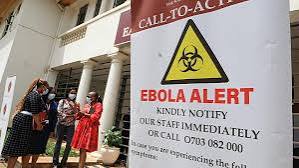
Kenya has intensified surveillance, contact tracing and treatment preparedness after confirming its first imported case of Bundibugyo virus disease, a form of Ebola, as health authorities work to prevent further transmission.
The Kenyan Ministry of Health said the patient, a Kenyan national who had been living in the Democratic Republic of Congo, developed symptoms there before travelling by road to Kampala, Uganda, and later flying to Nairobi. The patient was isolated after arriving in Nairobi but died on Oct. 5.
Kenya has identified 57 contacts linked to the case, according to the latest update from the Ministry of Health. Ten people have been traced and placed under quarantine at the National Police Service Hospital in Nairobi, while authorities continue efforts to locate and monitor the remaining contacts.
The authorities are also tracing 23 passengers and four crew members who travelled on the same flight as the patient.
Health Cabinet Secretary Aden Duale said Kenya does not currently have an Ebola outbreak, describing the confirmed case as an imported infection. He said the government was nevertheless strengthening surveillance and response measures to prevent the virus from spreading locally.
Border surveillance strengthened
Kenya has intensified screening at points of entry, particularly for travellers arriving from countries connected to the current Ebola outbreak.
At Jomo Kenyatta International Airport, authorities have designated Gate 16 for enhanced screening of passengers arriving from the Democratic Republic of Congo, Uganda, Tanzania, Ethiopia, Angola, Zambia, Rwanda, Burundi, the Central African Republic and South Sudan. Temporary isolation centres have also been identified at Malaba and Kocholia, while Alupe is undergoing renovation.
The Ministry has urged travellers to complete health declaration forms accurately and provide truthful information to support surveillance and contact tracing.
The case has also raised concerns about the effectiveness of cross border surveillance after the patient travelled through several countries before being diagnosed in Nairobi. The Africa CDC said stronger surveillance at points of entry was essential to detect infected travellers earlier.
Health facilities placed on alert
Kenya has designated five health facilities to isolate and manage suspected and confirmed cases. They include Kenyatta National Hospital, Moi Teaching and Referral Hospital, National Police Service Hospital, Port Reitz Hospital and Nairobi Hospital.
The facilities have a combined isolation capacity that can be expanded if required. Nairobi Hospital, where the patient was treated, has a dedicated isolation unit separated from the main hospital campus to reduce the risk of transmission.
The country has also trained 4,971 health workers in Ebola prevention and case management. More than 652,000 travellers had been screened and 267 suspected samples tested as of Oct. 6, according to the Ministry of Health.
WHO said Kenya’s Ebola preparedness score improved from 66 percent in May to 82 percent in July, reflecting progress in surveillance, laboratory testing, isolation capacity and the training of response teams. The agency has also supplied about 1,000 Ebola tests and 1,000 personal protective equipment kits to high risk counties.
Regional outbreak
The Kenyan case is linked to the ongoing Bundibugyo virus outbreak in eastern Democratic Republic of Congo. Kenya is the fourth country to confirm a case during the current outbreak, after the DRC, Uganda and France reported cases. Uganda declared its latest outbreak over in August after recording imported and locally acquired infections.
Bundibugyo virus disease spreads through direct contact with the blood or bodily fluids of an infected person or contaminated materials. There are currently no approved vaccines or specific treatments for the disease, although candidate products are being evaluated.
WHO and Africa CDC are supporting Kenya’s response through surveillance, laboratory capacity, contact tracing, simulation exercises and risk communication.
WHO Regional Director for Africa, Dr. Mohamed Janabi, said Kenya’s existing preparedness measures provided an important foundation for responding to the imported case and stressed the need for rapid action to identify any further infections.
Kenyan authorities have urged citizens to remain vigilant without panic, practise hand hygiene, avoid contact with people showing symptoms and seek medical attention promptly if they become ill or believe they have been exposed.
The response highlights the importance of sustained regional disease surveillance as people and goods move across East and Central Africa. Effective coordination between neighbouring countries, rapid laboratory diagnosis, trained health workers and transparent information sharing will remain central to preventing an imported case from developing into wider community transmission.













Leave a comment