


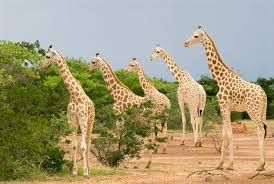
Giraffes, long believed to be a single species, have now been officially classified into four distinct species by the International Union for Conservation of Nature (IUCN), marking a historic shift in how the world’s tallest mammals are understood and protected.
The reclassification follows years of research suggesting genetic and evolutionary differences among giraffes across Africa. By studying skull size, head shape, and DNA, scientists confirmed that giraffes had evolved separately due to natural barriers such as rivers, mountains, valleys, and rainforests, which prevented interbreeding over time.
The four newly recognized species are the Southern giraffe, found in South Africa, Namibia, Angola, Botswana, Zambia, Zimbabwe, and Mozambique; the Reticulated giraffe, which inhabits Kenya, Somalia, and Ethiopia; the Northern giraffe, living in Ethiopia, Kenya, South Sudan, and Uganda; and the Masai giraffe, distinguished by its leaf-shaped patterns and found in Kenya, Tanzania, and Uganda.
Researchers highlighted that while coat patterns vary, even within the same population, the true distinction lies in the animals’ genetic makeup and evolutionary separation. Rivers like the Nile and Zambezi, along with Lake Victoria and the Congo Basin, served as natural dividers, isolating groups of giraffes for thousands of years and shaping them into separate species.
Michael Brown of the IUCN emphasized that understanding giraffe taxonomy is critical for conservation: “The more precisely we understand giraffe species, the better equipped we are to assess their status and implement effective conservation strategies.”
Previously listed as a single vulnerable species, giraffes will now be reassessed individually to determine the conservation status of each species and their subspecies. This new classification is expected to strengthen global conservation efforts, ensuring targeted protection strategies for one of Africa’s most iconic and beloved animals.










Leave a comment