


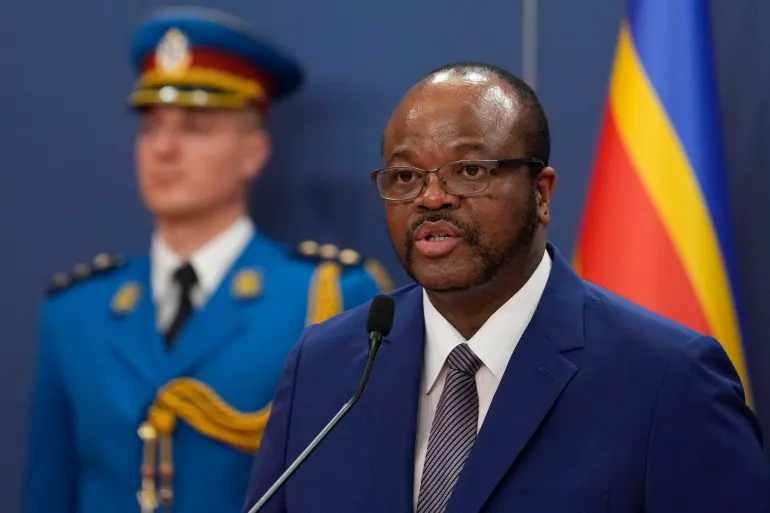
The United States has deported five individuals originally from Vietnam, Jamaica, Laos, Cuba, and Yemen to Eswatini after their home countries refused to accept their return. Labeled by U.S. officials as “criminal illegal aliens,” the deportees had been convicted of grave crimes, including murder and child rape, and were considered threats to public safety.
According to Tricia McLaughlin, a senior official at the Department of Homeland Security, the deportations were carried out under a policy of redirecting high-risk offenders to “safe third countries” when their countries of origin reject repatriation. Eswatini, a small landlocked monarchy in Southern Africa, agreed to receive the individuals on humanitarian and security terms.
The Eswatini government confirmed that the five men are currently being held in isolated correctional facilities and do not pose a threat to the public. Authorities emphasized that the arrangement was temporary and that they are working in collaboration with the U.S. and the International Organization for Migration (IOM), the United Nations’ migration agency, to facilitate the men’s eventual transfer back to their countries of origin.
The move has triggered strong criticism from Swazi pro-democracy activists and civil society organizations, who argue that the country risks becoming a “dumping ground” for international criminals. They also raised concerns over Eswatini’s capacity to securely house such high-risk offenders in a prison system already under pressure.
The deportations are part of a broader strategy by the U.S. government to bypass diplomatic impasses with uncooperative countries in deportation matters. Similar cases have recently been reported in South Sudan, with ongoing negotiations reportedly in place with other African countries, including Rwanda and Benin.
Critics say such practices raise legal, ethical, and sovereignty issues for receiving countries, especially those with limited resources. The situation underscores the growing complexities of global migration enforcement and the international tensions it continues to generate.










Leave a comment