


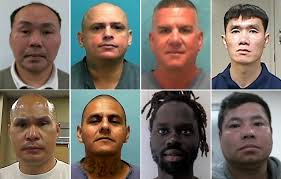
The United States has deported eight foreign nationals, including one South Sudanese citizen, to South Sudan following a lengthy legal standoff that temporarily diverted the deportation flight to Djibouti. The deportees convicted of serious crimes such as murder, sexual assault, and robbery had either completed or were nearing the end of their prison sentences in the US. The group includes individuals from Myanmar, Cuba, Vietnam, Laos, and Mexico, whose home countries reportedly refused to accept their return.
This latest deportation underscores the Trump administration’s intensified efforts to expand the scope of third-country deportations, sending foreign nationals to countries other than their own. Previous deportations under this policy have included El Salvador and Costa Rica, and diplomatic discussions have been confirmed with Rwanda. Other potential host nations reportedly include Benin, Angola, Equatorial Guinea, Eswatini, and Moldova.
The group was initially flown out of the US in May 2025, but a Massachusetts district judge, Brian Murphy, blocked their deportation, ruling that migrants being sent to third countries must be given notice and an opportunity to speak with an asylum officer. However, in a significant legal reversal last week, the US Supreme Court overturned Judge Murphy’s ruling, allowing the deportation to proceed. The Court’s decision effectively limited judicial oversight in such cases, with the Department of Homeland Security celebrating it as a triumph over what it called “activist judges.”
A photo released by the Department of Homeland Security showed the men shackled by their hands and feet aboard the deportation flight. Upon arrival in Juba, the group was placed in a civilian facility under the surveillance of police and South Sudan’s national security service. Civil society leader Edmund Yakani, who briefly saw the deportees, reported that they appeared to be in good condition and were not handcuffed upon arrival, though their legal status and future in South Sudan remain unclear. Yakani has urged the government to clarify the group’s legal standing and treatment.
The South Sudanese government has yet to issue an official statement on whether it formally agreed to receive the deportees or what actions will follow. The deportation raises pressing questions about South Sudan’s capacity and willingness to handle such returns, particularly given the country’s fragile security situation. The US State Department currently warns against all travel to South Sudan due to high risks of crime, kidnapping, and ongoing armed conflict, describing the country as teetering on the brink of civil war.
Earlier in 2025, US Secretary of State Marco Rubio escalated diplomatic pressure on South Sudan by revoking all visas for South Sudanese passport holders, citing the country’s past refusal to accept deported nationals. The latest deportation may signal renewed cooperation between Juba and Washington, albeit under contentious circumstances.
The case has sparked fresh debate over the ethics and legality of deporting individuals, many of whom have no ties to their assigned destination, under third-country agreements, particularly to unstable nations with limited human rights protections. Human rights advocates warn that such policies may violate international norms and expose deportees to undue risk, especially when they are not citizens of the receiving country.
As legal experts and civil society groups continue to scrutinize the implications of this high-profile deportation, attention now turns to how South Sudan’s government will manage the arrival of individuals who, in most cases, have no connection to the nation, and how this will shape future US deportation strategies.






Leave a comment