


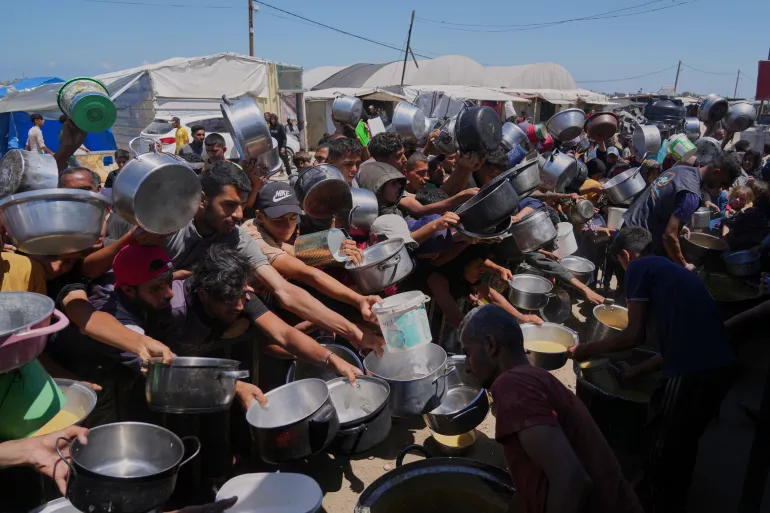
The United Nations has sounded a critical alarm over escalating hunger crises worldwide, warning that five countries Sudan, Palestine (Gaza), South Sudan, Haiti, and Mali, are on the brink of famine, with millions at immediate risk of starvation unless swift humanitarian action is taken. The warning comes from a joint report titled Hunger Hotspots, released on June 16, 2025, by the UN Food and Agriculture Organization (FAO) and the World Food Programme (WFP).
The report identifies 13 “hunger hotspots” where food insecurity is projected to worsen significantly between June and October 2025. The five most severely affected countries have been singled out due to the combined impact of armed conflict, economic instability, and climate-related disasters, which are driving large-scale displacement, infrastructure collapse, and severe aid access challenges.
In Sudan, ongoing civil conflict between the Sudanese Armed Forces and the Rapid Support Forces has pushed nearly 25 million people more than half the population into food insecurity. The UN report confirms famine conditions in some regions, with humanitarian aid severely disrupted due to attacks on aid workers and the destruction of medical and food infrastructure. The fighting has intensified in Darfur and the capital, Khartoum, leaving aid agencies unable to reach those in dire need.
In Palestine, the humanitarian catastrophe in Gaza has escalated since October 2023 following Israel’s military operations and sustained blockade. According to the report, the entire population of Gaza 2.1 million people is experiencing acute food insecurity, and nearly 500,000 individuals are expected to face catastrophic famine conditions by the end of September. Aid deliveries remain minimal, with the destruction of supply routes and UN warehouses contributing to the worsening crisis.
South Sudan, long plagued by political instability, is now reeling from historic floods and economic breakdowns. The report estimates that 7.7 million people over 60% of the population, are in crisis, with at least 63,000 people already experiencing famine-like conditions. Ongoing violence and poor road networks have made consistent aid delivery nearly impossible in large parts of the country.
In Haiti, a country grappling with chronic political chaos and gang violence, food insecurity continues to spiral. Blockades, fuel shortages, and widespread criminal control over supply chains have hindered humanitarian access to vulnerable populations. Economic collapse and inflation have exacerbated the situation, leaving nearly half of Haiti’s population in critical need of food assistance.
Mali also remains on the hunger watchlist due to increased conflict in its northern and central regions, ongoing military interventions, and deteriorating access to basic services. Climate shocks like drought and locust infestations are compounding food shortages, particularly among displaced populations.
FAO Director-General Qu Dongyu called for urgent action: “This report makes it very clear: hunger today is not a distant threat it is a daily emergency for millions. We must act now, and act together, to save lives and safeguard livelihoods.”
WFP Executive Director Cindy McCain added: “This report is a red alert. We know where hunger is rising and we know who is at risk. Without funding and access, we cannot save lives.”
For famine to be officially declared, an area must meet grim thresholds: at least 20% of the population facing extreme food shortages, 30% of children suffering acute malnutrition, and a death rate of two people per 10,000 per day due to starvation or related diseases. Several regions in the five most critical countries are approaching or have already reached these thresholds.
The Hunger Hotspots report urgently calls on the global community to prioritize funding, improve humanitarian access, and deploy rapid interventions to avert mass starvation in the coming months. With global conflicts and climate emergencies showing no signs of slowing down, the world’s most vulnerable populations now face one of the gravest hunger crises of the 21st century.










Leave a comment